

In 525 BCE, the armies of Persia crossed the burning sands of Sinai and entered the Nile Delta, fulfilling a dream begun by Cyrus the Great — the unification of East and West under a single empire. At their head was Cambyses II , son of Cyrus, commander of a vast force that swept through the fortified city of Pelusium and advanced on Memphis, toppling Egypt’s ancient 26th Dynasty.
Within a year, the empire of the Pharaohs had fallen. Egypt, the land of the gods and eternal kings, now belonged to the Persians. But Cambyses, remembered by his own court as a disciplined and pious king, became — in Greek memory — the mad tyrant of the desert, the man who murdered the sacred Apis bull, mocked Egyptian priests, and defiled temples.
Between the Persian king and the Egyptian past, myth began to grow. The story of Cambyses and the Apis bull is not merely one of conquest; it is a parable about the politics of perception — about how power is remembered, reimagined, and rewritten.
1. Pharaoh from Persia
When Cambyses ascended the throne in 530 BCE, the Persian Empire was the largest the world had yet seen. From the Indus to the Aegean, from the Caucasus to the Persian Gulf, Cyrus’s rule had united many lands under a new model of kingship — one built on local tolerance and imperial integration.
Egypt, however, remained unconquered. Wealthy, ancient, and self-contained, it stood as both a prize and a challenge. Cambyses inherited his father’s vision of universal rule and prepared for a massive campaign against Pharaoh Psamtek III, son of Amasis II.
According to Herodotus, Cambyses’s forces were bolstered by Arab allies who provided water across the desert and by defectors from the Egyptian court who weakened internal resistance [1]. In 525 BCE, at Pelusium, the gateway to Egypt, the Persians achieved a swift and decisive victory. The campaign ended with the capture of Memphis, and Psamtek’s subsequent execution.
Egypt now became a satrapy of the Persian Empire, but Cambyses chose a subtler title: “King of Upper and Lower Egypt, Mesutire, Son of Ra, Cambyses — may he live forever.” [2]
To Egyptians, he was Pharaoh; to Persians, the rightful heir of Cyrus. Yet between these identities lay a fault line of faith and culture.
2. Herodotus and the Making of a Villain
The Greek historian Herodotus, writing a century later, painted a dark portrait of Cambyses. In The Histories (Book III), he describes the Persian king as impulsive, cruel, and blasphemous: a ruler who desecrated the mummy of Amasis, killed priests, and — most infamously — murdered the sacred Apis bull, mocking the Egyptians’ tears over its death [3].
Herodotus’s account became the foundation of Cambyses’s reputation for madness. The image of a foreign despot raging against the gods fit perfectly into Greek narrative patterns: the hybris of kings who defy sacred order and are punished by divine justice.
Yet Herodotus, for all his curiosity, was not an eyewitness. By the time he travelled in Egypt, nearly a century had passed since Cambyses’s rule. His informants were priests and scribes living under Persian or early Greek occupation, inheritors of a century’s resentment toward imperial masters. Their stories were filtered through nostalgia and national pain.
The historian’s Cambyses is therefore not the Persian conqueror, but the Egyptian memory of him — a legend shaped by loss.
3. The Egyptian Record: Wedjahor-Resne Speaks
The real Cambyses appears not in Greek pages, but in Egyptian stone. The autobiography of Wedjahor-Resne (also transliterated Udjahorresne), discovered at Sais, provides a strikingly different testimony.
Wedjahor-Resne was a physician, naval officer, and high priest of Neith, the patron goddess of Sais. His career spanned the last native Pharaohs and the Persian conquest. In his tomb inscription, now preserved in the Vatican Museum, he recounts how Cambyses sought his counsel in ruling Egypt wisely [4].
“His Majesty Cambyses, the great ruler of all lands, came to Sais and knelt before Neith. He made a great offering to her and to all the gods of Egypt.”
Wedjahor-Resne goes on to describe how he educated Cambyses in Egyptian customs, advised him to cleanse the temples defiled during the war, and helped him adopt a pharaonic titulature befitting divine kingship. The most crucial act was naming him Mesutire, meaning “Born of Ra,” a title aligning the Persian with the solar lineage of Egyptian rulers [5].
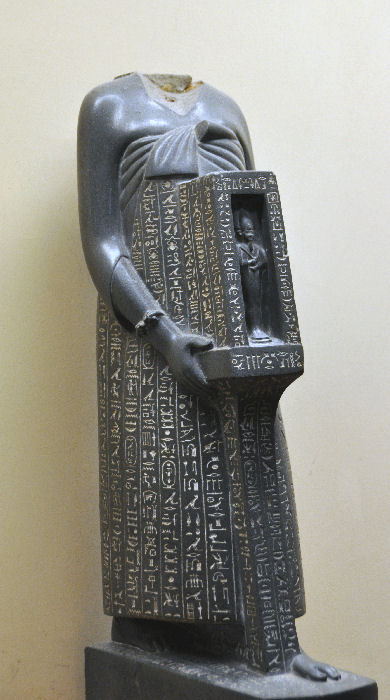
This account portrays Cambyses not as a destroyer, but as a student of Egypt’s sacred order — a foreign ruler striving to integrate rather than impose.
4. Cambyses as Pharaoh
Under Wedjahor-Resne’s guidance, Cambyses performed rituals of purification, restored temple endowments, and reduced taxes on religious estates. His decrees show deep awareness of Egyptian expectations: the king’s duty was not merely administrative but cosmic — maintaining ma’at, the divine balance between order and chaos.
He also appointed Aryandes as satrap of Egypt, a man who ruled for over two decades with relative stability [6]. Aryandes respected local autonomy, allowing Egyptian priests to manage temple lands, while Persian oversight ensured tribute flow to the imperial treasury.
The image that emerges from archaeological evidence is one of adaptation, not desecration. Far from slaughtering sacred animals, Cambyses appears to have honoured them.
5. The Death of the Apis Bull
The Apis bull was the living manifestation of Ptah, god of craftsmen, and a vital symbol of royal legitimacy. Upon its death, the bull was mummified and buried with elaborate rites in the Serapeum of Memphis.
During Cambyses’s reign, one such bull died. Far from committing sacrilege, the king ordered a lavish burial, commissioning a granite sarcophagus bearing a dedicatory text in traditional Egyptian style. The inscription reads:
“Horus, Uniter of the Two Lands, King of Upper and Lower Egypt, Mesutire, Son of Ra, Cambyses—may he live forever! He has made a fine monument for his father Apis-Osiris with a great granite sarcophagus, dedicated by the King of Upper and Lower Egypt, Mesutire, Son of Ra, Cambyses—may he live forever, in perpetuity and prosperity, full of health and joy, as King of Upper and Lower Egypt eternally!” [7]

This inscription, carved into the sarcophagus now preserved in the Serapeum at Saqqara, stands as irrefutable evidence that Cambyses treated the bull’s death with reverence. The very accusation of murder likely arose from misunderstanding or from later political propaganda — perhaps a distorted echo of the death coinciding with his campaign.
6. Aryandes and the Persian Administration
Cambyses’s most enduring administrative act in Egypt was his appointment of Aryandes as satrap. Aryandes governed for nearly thirty years, maintaining order even as Persia entered the turbulent reign of Darius I.
The satrapal system allowed local continuity: Egyptian priests continued rituals, scribes recorded in hieratic script, and temples remained economic hubs. Persia’s approach to empire was pragmatic — control through cooperation.
Aryandes minted local coinage resembling Athenian silver drachmas, illustrating the blending of Greek, Egyptian, and Persian economies [8]. His long tenure demonstrates that Cambyses’s conquest, while resented, did not devastate Egyptian structures; it merely reoriented them toward a global empire.
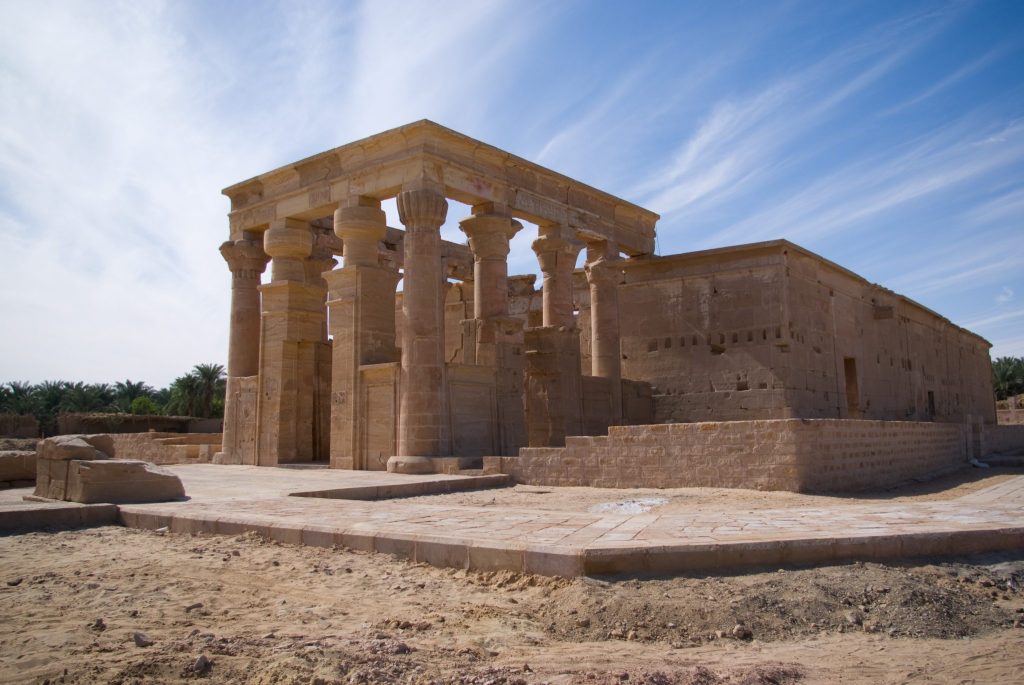
Even Darius I, when he later visited Egypt, continued many of Cambyses’s policies, restoring canals and temples in the Delta and commissioning inscriptions in hieroglyphs proclaiming his devotion to Egyptian gods [9].
7. Memory and Myth: The Making of Madness
If Cambyses ruled wisely, why did history remember him as mad?
The answer lies in cultural memory, not in fact. Egypt’s identity was ancient, proud, and self-contained. For three millennia, its kings had been native-born divine intermediaries. A foreigner, even one respectful of custom, could never truly be Pharaoh in Egyptian eyes.
When Egypt later suffered under harsher Persian satraps, nostalgia recast Cambyses as the first desecrator. By the time Herodotus visited in the fifth century BCE, a full century of resentment had hardened into legend. The priests he interviewed had inherited a moral story, not a political one: a tale of divine retribution for foreign hubris.
The narrative of Cambyses’s “madness” therefore reflects the psychology of defeat. It was easier to imagine Egypt conquered by a lunatic than to admit that its gods had been powerless before a rational, pious foreigner.
Greek authors, attuned to moral allegory, amplified this version. To them, Cambyses was the archetype of imperial overreach — a warning against the very kind of empire Persia represented [10]. Thus myth became memory, and memory history.
8. Between History and Reflection
Revisiting Cambyses’s reign invites a deeper question: how does power survive translation?
Cambyses ruled not only as a conqueror but as a learner. His reign shows the tension between universal kingship — the Persian idea that the king ruled “all peoples by the will of Ahura Mazda” — and cultural kingship — Egypt’s demand that the Pharaoh embody its sacred cosmology. Cambyses tried to be both, and in doing so, became misunderstood by both.
The Apis bull inscription and Wedjahor-Resne’s memoir show a ruler striving to harmonise two worlds: Persia’s ethical universalism and Egypt’s divine particularism. The failure of memory to preserve this nuance reveals the fragility of empire — not in arms, but in meaning.
9. Legacy: The Pharaoh of Two Truths
Modern Egyptology has largely vindicated Cambyses. Archaeological records confirm his respect for temples, his administrative reforms, and his full participation in Egyptian royal ritual. Yet Herodotus’s image still lingers — the mad king who killed a god.
This dual legacy is fitting. Cambyses stands as a Pharaoh of two truths: the one written in hieroglyphs of devotion, and the one etched in the imagination of those he conquered.
In this website continuing series and in my forthcoming historical fiction The Princess of Pasargadae, Cambyses becomes not merely a figure of conquest, but a mirror for the age-old struggle between empire and identity — between how rulers act and how they are remembered.
As the Apis bull sleeps in its granite tomb, it reminds us that beneath every legend lies a buried truth — waiting, like the bull itself, to be unearthed.
Footnotes
- Herodotus, Histories, Book III, trans. A. D. Godley (Loeb Classical Library, 1920).
- Lichtheim, M. Ancient Egyptian Literature, Vol. 3: The Late Period, University of California Press, 1976.
- Briant, P. From Cyrus to Alexander: A History of the Persian Empire, Eisenbrauns, 2002, pp. 55–62.
- Ray, J. D. “The Satrap and the Pharaoh: Udjahorresne and Cambyses,” Journal of Egyptian Archaeology 68 (1982).
- Kuhrt, A. The Persian Empire: A Corpus of Sources, Routledge, 2007.
- Posener, G. “Cambyse et le taureau Apis,” Revue d’Égyptologie 8 (1951).
- Ibid., p. 97.
- Briant, P. op. cit., pp. 63–70.
- Henkelman, W. F. M. “Egypt and the Achaemenids,” Persica 22 (2008).
- Lincoln, B. Religion, Empire, and Torture: The Case of Darius and the Magian, University of Chicago Press, 2007.


 Kam Austine
Leave a comment