
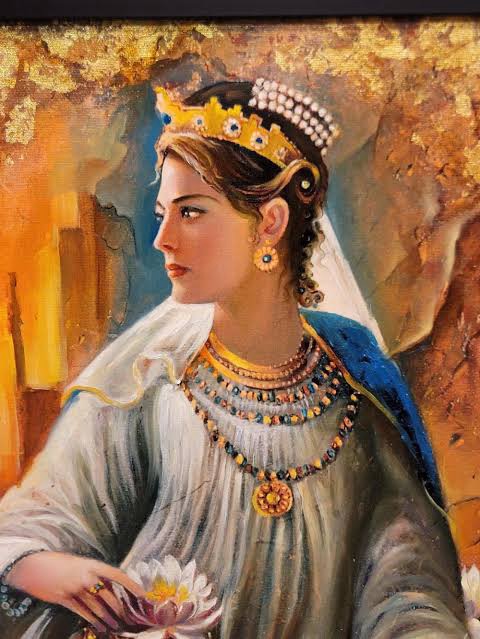
Atossa, daughter of Cyrus the Great and Queen during the reign of Darius I, remains a historically significant figure in the annals of the Persian Empire. Her life, intertwined with the greatest of Persian kings, reflects both her royal influence and the complexities of ancient politics. Moreover, she is known for her medical history, being the first recorded case of breast cancer, as noted by ancient historians like Herodotus. This article aims to uncover the many facets of Atossa’s life, highlighting her influence during the reigns of Cambyses II, Bardiya, Darius, and Xerxes, as well as the remarkable historical documentation of her illness.
Atossa’s Background and Influence during Cambyses II and Bardiya’s Reigns
As the daughter of Cyrus the Great, Atossa was part of the royal family during the reigns of her brother Cambyses II and the enigmatic Bardiya. Her presence in the court during Cambyses II’s rule is less documented, but as a prominent family member, she likely had influence in supporting Cambyses II’s expansionist campaigns, including his conquest of Egypt.
When Bardiya assumed the throne, whether as the real prince or the imposter Gaumata (Read Behistun Inscription and the Mystry of False Bardiya for detailed story.), Atossa’s role became more critical. She needed to navigate the unstable political landscape to safeguard her position and those of her offspring. Some historical accounts suggest that Bardiya’s death and the subsequent rise of Darius I to power created an opportunity for Atossa to solidify her influence.
Her marriage to Darius I soon after the fall of Bardiya solidified her prominence in the Achaemenid dynasty, securing her position as Queen and enabling her to wield significant political power.
Atossa’s Contributions during Darius’s Reign
As Queen to Darius I, Atossa became a trusted advisor and influential figure within the court. She played a key role in courtly politics, shaping decisions behind the scenes, particularly through her familial connections. Her most significant achievement during this period was ensuring her son Xerxes would succeed Darius despite rival claims from other offspring.
Atossa’s diplomatic acumen and her ability to garner support from influential figures within the empire helped establish Xerxes as the clear heir to the Persian throne. Beyond her involvement in the succession, she may have also influenced the administrative policies that helped stabilise the vast Achaemenid Empire during Darius’s reign.
Atossa’s Influence on Xerxes’s Rule
After Darius I’s death, Atossa continued to exert influence in her role as Queen Mother during Xerxes’s reign. Her position granted her significant authority and respect, helping to guide her son in statecraft and maintaining stability within the royal court. This guidance was crucial as Xerxes assumed control of the vast empire and dealt with ongoing internal and external challenges.
Atossa’s strategic foresight and her familiarity with the political intricacies of the empire allowed her to be a valuable counselor, shaping the policies that helped Xerxes maintain cohesion across his territories. Ancient texts indicate that she held considerable sway over Xerxes, leveraging her experience to ensure continuity in Persian governance.
The First Recorded Case of Breast Cancer
Atossa is also notable for being the first documented case of breast cancer. According to ancient Greek historian Herodotus, Atossa developed a breast lump that alarmed her to the point of seeking medical advice. Her Greek slave and physician, Democedes, reportedly treated the Queen by excising the tumor.
This historical account provides one of the earliest descriptions of breast cancer, highlighting the challenges of medical practice in the ancient world. Atossa’s case sheds light on ancient approaches to disease and cancer management, illustrating the resourcefulness of physicians of the era who had limited tools and knowledge. It also demonstrates how influential figures like Atossa could have access to better care, even in ancient times.
Read this article if you are interested: Atossa’s Breast Cancer: The First Recorded Case in History
Legacy and Historical Significance
Atossa’s legacy is a testament to her enduring influence across several reigns and the broader history of the Persian Empire. Her strategic acumen helped shape the succession and policies of the empire, and she played a significant role in the stability and legacy of the Achaemenid dynasty.
Her impact resonates beyond her own life, through the sons she ensured would secure the Persian throne and the historical record of her medical condition. This legacy contributes to the understanding of women’s roles in ancient Persian politics and the challenges faced by even the most privileged individuals.
Conclusion
Atossa, daughter of Cyrus the Great, navigated the complexities of Achaemenid court politics with remarkable skill. Her influence extended across multiple reigns, and she secured her place in history not just as a political force but also as the first known case of breast cancer. Her legacy reflects the dynamic and impactful roles women played in shaping ancient empires, while her documented illness offers invaluable insights into early medical practices. Understanding Atossa’s life allows us to appreciate the nuances of Persian history and the intricacies of the human condition across millennia.


 Kam Austine
Leave a comment