
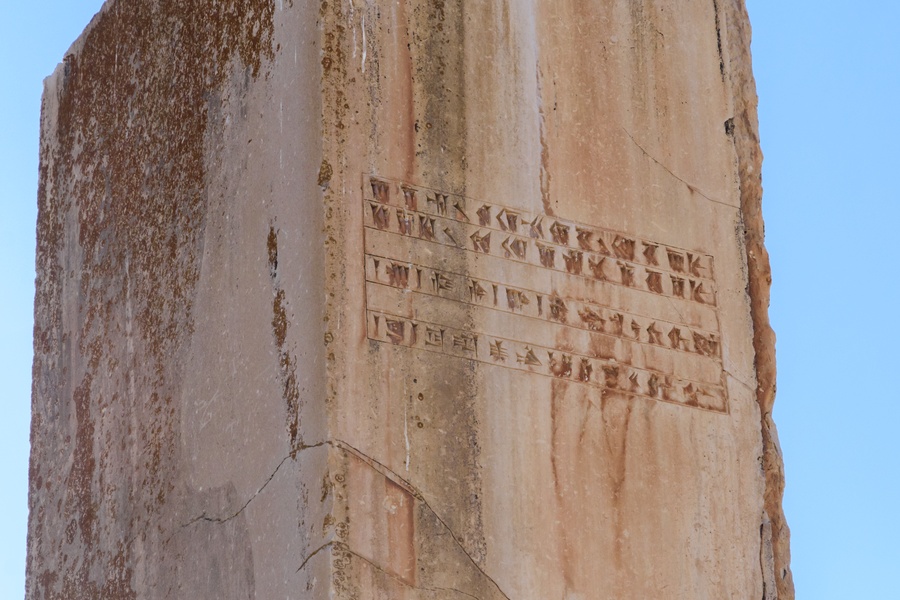
Pasargadae, the first dynastic capital of the Achaemenid Empire, is a witness to the vision and grandeur of Cyrus the Great. Established in the 6th century BCE, this ancient city laid the foundations for what would become one of the largest empires in history. As a symbol of Persian unity and power, Pasargadae not only served as the political and administrative centre of the Achaemenid dynasty but also as a beacon of architectural innovation and cultural fusion.
This article explores the significance of Pasargadae, delving into its founding, architectural marvels, and its enduring legacy as the heart of the Persian Empire.
Founding of Pasargadae
Cyrus the Great founded Pasargadae around 546 BCE following his victory over the Median king Astyages. Located in the fertile plain of Murghab, in present-day Fars Province, Iran, the site was strategically chosen for its defensible position and its proximity to important trade routes. The establishment of Pasargadae marked the consolidation of Cyrus’s power and the unification of the Persian tribes under his rule.
The design of Pasargadae was symbolic of Cyrus’s vision for his empire. It was conceived not just as a political capital, but as a symbol of the new Persian identity that incorporated various cultural elements from the peoples Cyrus had conquered. The city’s layout reflected a blend of Persian, Median, and Mesopotamian architectural styles, signifying the multicultural nature of the Achaemenid Empire.
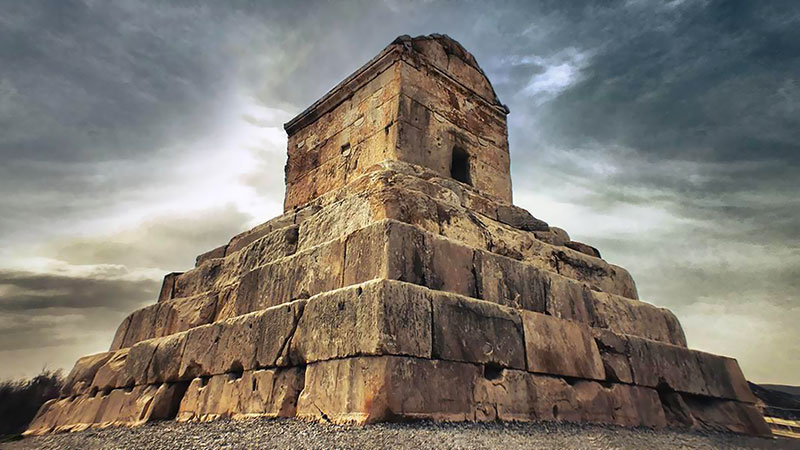
Eternal Majesty: The Tomb of Cyrus the Great from Past to Present
Architectural Significance
Pasargadae is renowned for its architectural splendour, which showcases the ingenuity and artistic achievements of the early Achaemenid period. The most iconic structure is the Tomb of Cyrus, a simple yet majestic edifice that has survived the ravages of time. Constructed of large, white limestone blocks, the tomb stands on a stepped platform, evoking both the ziggurats of Mesopotamia and the indigenous Persian architectural traditions.
The royal palaces of Pasargadae were equally impressive. The audience hall, known as the Apadana, featured grand columned halls with intricately carved stone reliefs depicting scenes of royal ceremonies and the diverse peoples of the empire bringing tribute. The use of columned halls was an architectural innovation that would become a hallmark of Persian palace design.
Gardens were an integral part of Pasargadae’s design, reflecting the Persian love for nature and the concept of paradise gardens, or “pairidaeza.” These gardens, with their geometric layouts and sophisticated irrigation systems, symbolized the harmony and order that Cyrus sought to impose on his empire. The influence of these gardens extended far beyond Persia, inspiring similar designs in later Islamic and Western garden traditions.

Pasargadae as a Political and Administrative Center
As the administrative heart of the Achaemenid Empire, Pasargadae was the epicenter of political power and governance. Cyrus the Great and his successors implemented several administrative innovations from this city, establishing a model that would sustain the empire for centuries.
The Achaemenid administrative system was characterized by a decentralized yet unified structure. The empire was divided into several provinces, or satrapies, each governed by a satrap appointed by the king. This system allowed for efficient local governance while maintaining overall imperial control. Pasargadae, as the capital, housed the central bureaucracy that coordinated these efforts, ensuring that the vast and diverse empire operated smoothly.
The city also served as a venue for important political gatherings and ceremonies. It was here that Cyrus proclaimed his famous decree of religious tolerance, which allowed the various peoples of his empire to practice their own religions and maintain their cultural traditions. This policy not only fostered loyalty among his subjects but also contributed to the stability and cohesion of the empire.
Cultural and Religious Importance
Pasargadae was not only a political and administrative center but also a cultural and religious hub. The city’s diverse population brought with them a rich variety of cultural traditions, which were reflected in the daily life and religious practices of the city.
Cyrus the Great is often celebrated for his policy of religious tolerance, and Pasargadae exemplified this approach. The city featured temples and sanctuaries dedicated to various deities, reflecting the pluralistic nature of the Achaemenid Empire. Zoroastrianism, the religion that would later become closely associated with the Persian identity, had a significant presence in Pasargadae, with fire altars and sacred spaces dedicated to Ahura Mazda, the chief deity of the Zoroastrian pantheon.
Religious ceremonies and festivals were an integral part of life in Pasargadae. These events, which included elaborate rituals, processions, and feasts, served to reinforce the divine sanction of the Achaemenid rulers and the unity of the empire. The city’s gardens and open spaces provided the perfect setting for these communal gatherings, further enhancing the cultural life of Pasargadae.

Decline and Legacy
The decline of Pasargadae began after the death of Cyrus the Great, as subsequent rulers, including Darius I, shifted the capital to Persepolis. While Pasargadae remained an important ceremonial site, its political and administrative significance gradually waned. By the time of Alexander the Great’s conquest of Persia, the city had lost much of its former glory.
However, the legacy of Pasargadae endures. The architectural innovations and administrative practices developed in the city influenced the design and governance of subsequent Persian capitals, including Persepolis and Susa. The concept of the paradise garden, first realized in Pasargadae, continued to inspire garden designs across the Middle East and beyond.
Today, Pasargadae is recognized as a UNESCO World Heritage Site, preserving the memory of Cyrus the Great and his visionary capital. The ruins of the city, including the Tomb of Cyrus, continue to attract scholars and visitors, offering a glimpse into the magnificence of the Achaemenid Empire.
Conclusion
Pasargadae, the heart of the Persian Empire, stands as a witness to the vision and legacy of Cyrus the Great. From its founding as a symbol of Persian unity to its architectural marvels and administrative innovations, Pasargadae played a pivotal role in shaping the Achaemenid Empire. Its legacy, reflected in subsequent Persian capitals and cultural traditions, underscores the enduring significance of this ancient city in Persian history.


 Kam Austine
Leave a comment