

Part 1: The Establishment and Structure of Satrapies
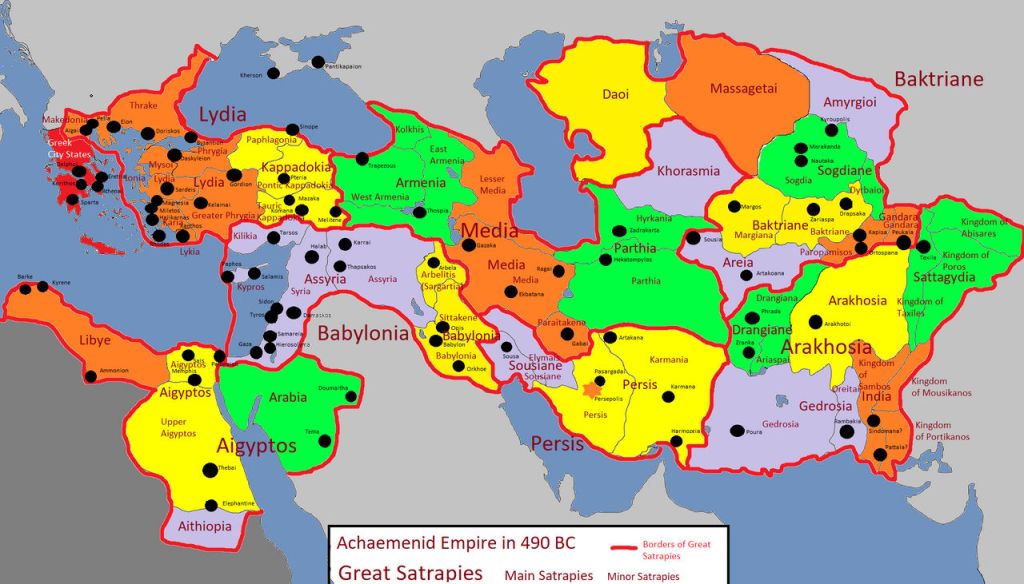
The Achaemenid Empire, founded by Cyrus the Great in the 6th century BCE, was one of the largest and most diverse empires of the ancient world. To manage this vast territory, the Achaemenid rulers developed an innovative administrative system centered around satrapies. Satraps, or provincial governors, played a crucial role in maintaining the stability and cohesion of the empire. This article explores the establishment and structure of satrapies, highlighting the responsibilities of satraps and their impact on the empire’s administration.
The Concept of Satrapy
A satrapy was a province in the Achaemenid Empire, governed by a satrap appointed by the king. The concept of satrapy originated with Cyrus the Great, who recognised the need for a decentralised system to manage the diverse and sprawling empire. Each satrapy was essentially a mini-kingdom, with the satrap acting as the king’s representative, ensuring the loyalty of the local population and the efficient administration of the region.
Cyrus’s innovation lay in maintaining local traditions and administrative practices while integrating them into the broader imperial framework. This approach helped in gaining the loyalty of conquered peoples and facilitated the smooth functioning of the empire.
Role and Responsibilities of Satraps
Satraps were responsible for the overall governance of their provinces. Their duties included:
- Tax Collection: Satraps were tasked with collecting taxes and tributes from their provinces. They ensured that the revenue was efficiently gathered and forwarded to the central treasury. This responsibility made them crucial to the financial stability of the empire.
- Military Oversight: Satraps were responsible for maintaining a provincial army and defending the region against external threats and internal rebellions. They often led military campaigns and ensured the security of the empire’s borders.
- Judicial Functions: Satraps had judicial authority within their provinces. They were responsible for maintaining law and order, settling disputes, and administering justice according to local customs and imperial laws.
- Infrastructure Management: Satraps oversaw the construction and maintenance of infrastructure, including roads, bridges, and canals. These projects facilitated trade, communication, and military movement across the empire.
Administrative Structure
The administrative structure within a satrapy was hierarchical. Below the satrap were various officials responsible for different aspects of governance, such as finance, military, and judiciary. This structure ensured that the satrap could effectively manage the province while delegating specific tasks to trusted subordinates.
Satraps reported directly to the king and were expected to provide regular updates on the state of their provinces. This direct line of communication helped the central government stay informed about local conditions and allowed the king to intervene when necessary.
Notable Satrapies and Satraps
Several satrapies were particularly significant in the Achaemenid Empire:
- Lydia: Located in western Anatolia, Lydia was one of the most prosperous satrapies. It was governed by satraps like Artaphernes, who played a crucial role in maintaining Persian control over the region.
- Egypt: As a wealthy and strategically important satrapy, Egypt required strong governance. Satraps like Aryandes managed Egypt’s resources and ensured its loyalty to the Persian crown.
- Bactria: Located in Central Asia, Bactria was a key satrapy for controlling the eastern borders of the empire. Its satraps played a vital role in securing the empire against nomadic invasions.
Challenges and Conflicts
Despite their importance, satraps faced numerous challenges. Maintaining authority in diverse and often rebellious provinces was no easy task. Satraps had to balance local customs with imperial directives, manage conflicts between different ethnic groups, and suppress revolts.
One notable conflict was the Ionian Revolt (499-493 BCE), where Greek city-states in the satrapy of Lydia rebelled against Persian rule. The satrap Artaphernes played a crucial role in suppressing the revolt and restoring order.
Conclusion
The establishment of satrapies was a cornerstone of the Achaemenid Empire’s administrative success. Satraps played a vital role in governing the vast and diverse territories, ensuring stability and cohesion. However, their role was not without challenges, as they had to navigate the complexities of local governance while maintaining loyalty to the central authority. The next part of this series will explore the evolution of satrapal power dynamics and their lasting legacy in the ancient world.
Move to Part 2: The Role of Satraps in the Achaemenid Empire: Balancing Power and Authority


 Kam Austine
Leave a comment