
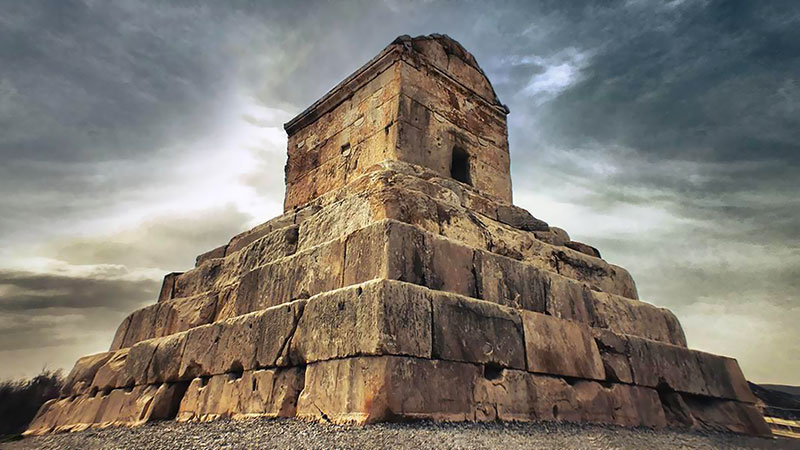
Cyrus the Great, the founder of the Achaemenid Empire, is one of history’s most revered figures. His leadership and vision laid the foundations for what would become one of the largest empires in ancient history. Among his many legacies, the tomb of Cyrus the Great stands as a tribute to his greatness and the enduring respect he commanded. Located in Pasargadae, this monumental structure has fascinated historians, archaeologists, and visitors for centuries. This article delves into the technical and archaeological aspects of the tomb, from its construction to its current state.
Construction of the Tomb
The tomb of Cyrus the Great was constructed in the mid-6th century BCE, shortly after his death in 530 BCE. Situated in the ancient city of Pasargadae, the tomb was designed to reflect the simplicity and grandeur that characterised Cyrus’s reign. The structure is a unique blend of Mesopotamian, Elamite, and Persian architectural styles, symbolising the diverse cultural influences of the Achaemenid Empire.
Architectural Design and Materials
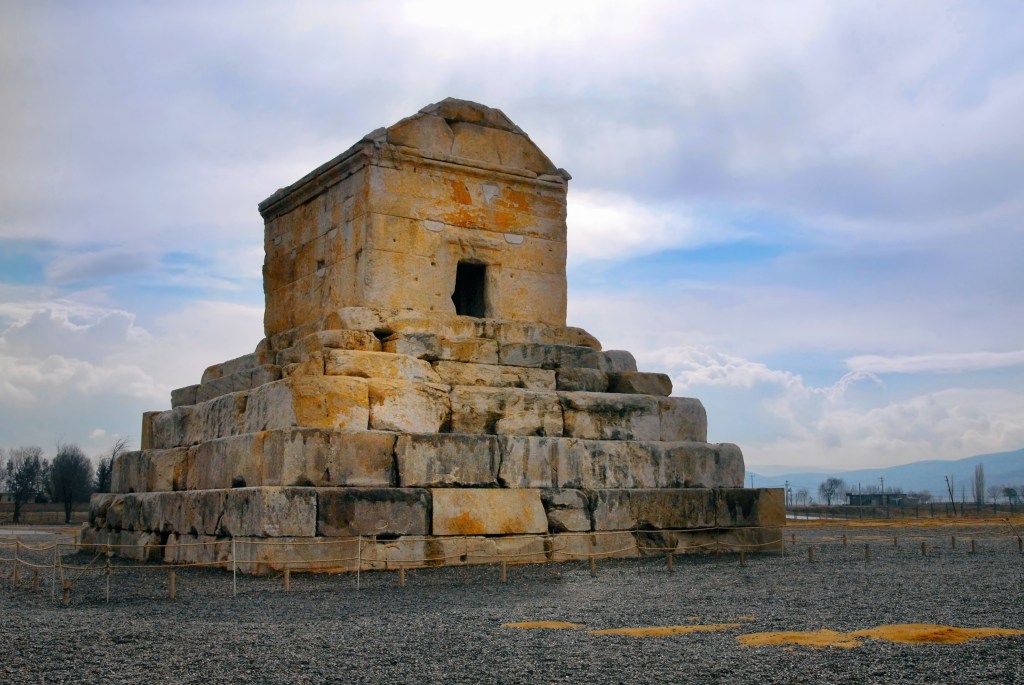
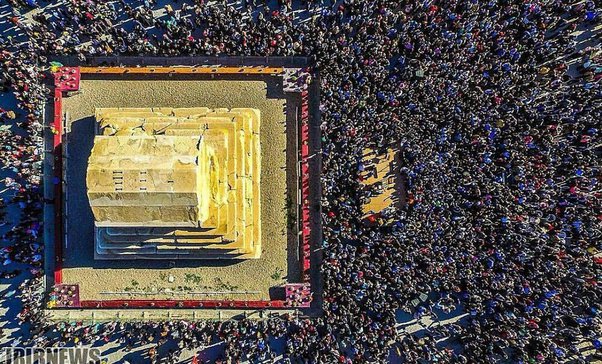
The tomb’s design is notably austere yet majestic. It consists of a rectangular chamber elevated on a six-stepped platform, reaching a height of about 11 meters (36 feet). The simplicity of its design contrasts with the elaborate decorations typical of later Achaemenid architecture, emphasising the humility and strength of Cyrus himself.
The materials used in the construction were primarily large, white limestone blocks, precisely cut and fitted together without mortar. The precision of the construction ensured the stability and durability of the structure, allowing it to withstand the ravages of time.
The tomb’s chamber, accessible by a small, narrow entrance, would have housed a sarcophagus, although no trace of it remains today. This simplicity is a stark contrast to the grandeur of later Persian royal tombs, reflecting Cyrus’s personal humility.
Symbolism and Cultural Significance
The architectural style and location of the tomb hold significant symbolic meaning. The stepped platform is reminiscent of the ziggurats of Mesopotamia, while the overall form reflects influences from the Elamite and Persian traditions. This amalgamation of styles symbolises the unification of various cultures under Cyrus’s rule.
The tomb’s location in Pasargadae, the first capital of the Achaemenid Empire, further underscores its importance. Pasargadae was not only the administrative centre of the empire but also a place of great spiritual and cultural significance. The placement of Cyrus’s tomb here highlighted the city’s status as the heart of the Achaemenid world.
Historical Significance
The tomb of Cyrus the Great holds a central place in the cultural and political history of Persia. Ancient historians, including Herodotus and Strabo, documented the tomb, noting its grandeur and the reverence it commanded. According to these accounts, the tomb was a site of pilgrimage and respect for both Persian and foreign visitors, reflecting Cyrus’s enduring legacy as a fair and just ruler.
Role in Achaemenid Culture
In Achaemenid culture, the tomb served as a powerful symbol of continuity and legitimacy. Successive kings visited the tomb to pay their respects, reaffirming their connection to Cyrus’s legacy and seeking to draw on his authority. The tomb’s prominence in royal ceremonies and its continued maintenance by the Achaemenid rulers underscore its lasting significance.
The respect for the tomb extended beyond the Achaemenid period. Even during the turmoil of subsequent dynasties, the tomb remained a symbol of Persian heritage and pride. This reverence is reflected in various historical accounts and the efforts to preserve the tomb throughout history.
Early Travelers and Descriptions
The tomb of Cyrus the Great captured the attention of many early travelers who documented their observations, providing invaluable insights into its historical context. One notable traveler was Alexander the Great, who visited the tomb in 330 BCE during his conquest of the Persian Empire. According to historical records, Alexander ordered repairs to the tomb, indicating its dilapidated state even then. This act of respect underscores the profound impact Cyrus had on subsequent leaders.
Early Illustrations and Photographs
In the 17th century, European travelers began documenting the tomb. Jean Chardin, a French traveler and jeweler, visited the site during the reign of Safavid Shah Suleiman I (Khorshidi date: 1077-1105) and provided one of the earliest detailed descriptions of the tomb. His accounts, along with those of other explorers like Pietro Della Valle and Carsten Niebuhr, were crucial in bringing the tomb to the attention of the Western world.
The first known photograph of the tomb was taken by Luigi Pesce, an Italian military officer and photographer, in the mid-19th century during the Qajar era, under Naser al-Din Shah (Khorshidi date: 1227-1275). His photographs provided a visual record of the tomb and helped in its preservation by highlighting its historical significance.
Archaeological Findings and Studies
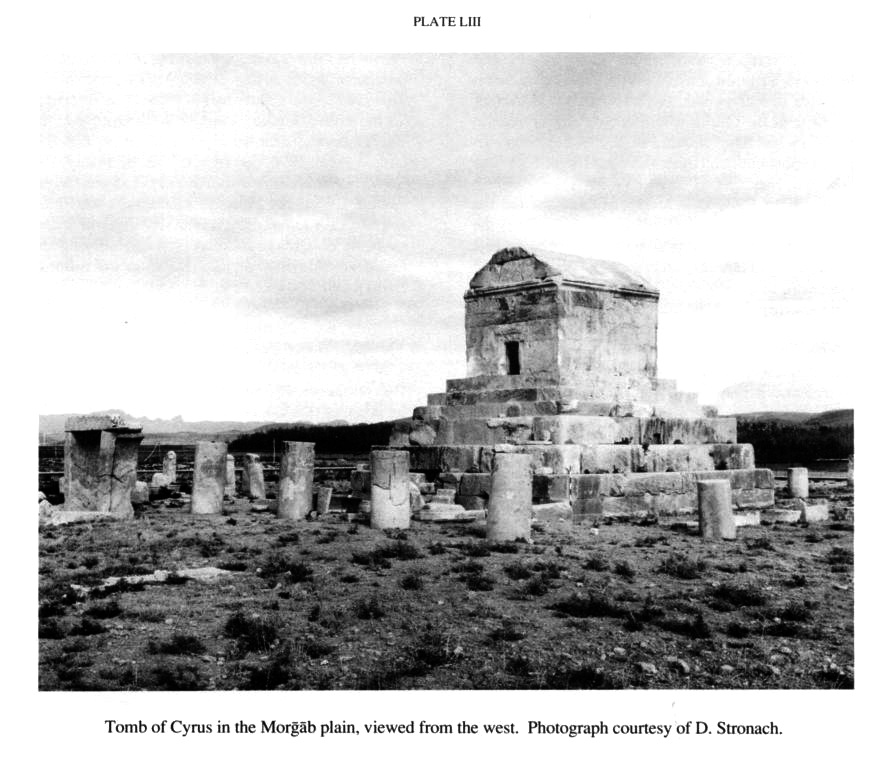
The tomb of Cyrus has been the subject of extensive archaeological study, revealing insights into its construction, usage, and historical context. Early explorations in the 19th and 20th centuries uncovered significant details about the structure and its surroundings.
Structure and Interior
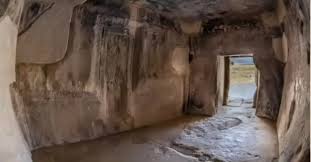
The tomb’s interior consists of a small, rectangular chamber accessible through a narrow entrance. Inside, the chamber would have originally housed a sarcophagus, believed to be the resting place of Cyrus himself. Although the sarcophagus has not survived, the chamber’s design and construction reflect the high level of craftsmanship and architectural knowledge of the time.
The stepped platform and the chamber’s walls are adorned with intricate carvings and details that provide valuable information about the tomb’s construction and the historical context of Cyrus’s reign. These architectural elements celebrate Cyrus’s achievements and underscore his significance as a ruler.
Artifacts and Surroundings
Archaeologists have uncovered various artifacts in and around the tomb, including pottery, tools, and remnants of ceremonial objects. These findings offer insights into the rituals and practices associated with the tomb, highlighting its role as a site of pilgrimage and reverence.
The surrounding area of the tomb has also revealed important archaeological findings. The garden and irrigation systems, reflective of Persian paradise gardens, were discovered through careful excavation. These elements underscore the cultural and aesthetic values of the Achaemenid period.
Preservation and Restoration Efforts
The tomb of Cyrus the Great has faced numerous challenges over the centuries, including natural decay and human interference. Efforts to preserve and restore the tomb have been ongoing, reflecting its importance as a cultural and historical landmark.

Early Preservation Efforts
In the early 20th century, European archaeologists and historians recognized the tomb’s significance and initiated preservation efforts. These early projects focused on stabilizing the structure and protecting it from further decay.
One significant figure in the early preservation efforts was Ernst Herzfeld, a German archaeologist who conducted extensive studies and restorations at Pasargadae in the 1920s and 1930s. His work laid the groundwork for future conservation efforts and provided a detailed record of the site’s condition.
Modern Restoration Projects
In recent decades, more comprehensive restoration projects have been undertaken to ensure the tomb’s long-term preservation. These efforts have involved collaboration between Iranian authorities and international experts, utilizing advanced conservation techniques to maintain the tomb’s structural integrity and aesthetic appeal.
The tomb’s designation as a UNESCO World Heritage Site in 2004 has further bolstered preservation efforts, highlighting its global significance and ensuring continued support for its maintenance and protection. Modern technologies, such as 3D scanning and digital modeling, have been employed to monitor the tomb’s condition and guide restoration efforts.
The Tomb in Modern Times
Today, the tomb of Cyrus the Great stands as a testament to the enduring legacy of one of history’s most influential rulers. It attracts visitors from around the world, who come to pay their respects and marvel at its historical and architectural significance.
Cultural and Tourist Attraction
The tomb is a major cultural and tourist attraction, drawing visitors interested in the rich history of ancient Persia. Educational programs and guided tours help visitors understand the tomb’s significance and the broader context of Cyrus’s reign and the Achaemenid Empire.
The site is also a place of national pride for Iranians, who view the tomb as a symbol of their rich cultural heritage and historical continuity. Various cultural events and ceremonies are held at the site, reinforcing its status as a living monument to Persian history.
Ongoing Research and Discoveries
Ongoing archaeological research continues to uncover new insights into the tomb and its historical context. Modern technologies, such as ground-penetrating radar and 3D scanning, have enabled researchers to explore the structure in unprecedented detail, revealing new aspects of its construction and usage.
Recent studies have focused on the environmental impact on the tomb and the surrounding area, guiding conservation efforts to mitigate the effects of erosion and pollution. These ongoing efforts ensure that the tomb remains preserved for future generations to study and appreciate.
Conclusion
The tomb of Cyrus the Great is a remarkable monument that encapsulates the legacy of one of history’s most influential rulers. From its construction in the 6th century BCE to its modern-day preservation, the tomb has stood as a testament to the greatness of Cyrus and the enduring significance of the Achaemenid Empire. Its architectural brilliance, historical importance, and continued relevance make it a vital part of our global heritage. Preserving and studying this ancient monument allows us to connect with the past and draw inspiration from the achievements of one of history’s greatest leaders.
The enduring respect for Cyrus the Great and his tomb highlights the importance of preserving historical monuments. These efforts not only honor the legacy of great leaders but also provide invaluable insights into the cultural and historical contexts of their time. The tomb of Cyrus the Great remains a symbol of the rich heritage of Persia and the broader ancient world, offering a window into the past that continues to inspire and educate.
Next you may want to explore:
Cyrus the Great’s Cylinder – A Very First Ancient Commandments of Human Rights
Persepolis: From Pasargadae to the Making of an Imperial Stage
The Women of Pasargadae: Influential Queens and Princesses in Persian History
The Deaths of the Achaemenid Kings: Power and Peril from Cyrus to Darius III


 Kam Austine
Leave a comment