

Picture above: A relief detail of Ashurbanipal hunting on horseback, which is part of the British Museum exhibition. Photograph: British Museum/PA
Before the rise of the Persian Empire, the ancient Near East was shaped by the iron grip of Assyria — a civilisation that perfected the machinery of empire centuries before Cyrus the Great marched on Babylon. The Assyrians built the first truly professional armies, deployed psychological warfare, engineered sophisticated administrative systems, and constructed a centralised, militarised state that dominated Mesopotamia for nearly three hundred years.
Yet when the Achaemenids rose to power in the sixth century BCE, they did not merely replicate the Assyrian model — they studied it, inherited its infrastructure, and consciously rejected its methods of fear and brutality. The Persian Empire was not built in isolation; it was built in dialogue with what came before. And the Assyrian experience served as both blueprint and warning.
This article explores how the Persian imperial structure grew out of — and diverged from — the Assyrian legacy, transforming Near Eastern kingship from an empire of terror into one of order, pluralism, and endurance.
Assyria: Masters of Conquest and Fear
The Neo-Assyrian Empire (c. 911–609 BCE) was the most powerful and centralised state the ancient world had seen. From its capitals at Nineveh, Kalhu (Nimrud), and Dur-Sharrukin, Assyrian kings waged relentless campaigns of expansion, reaching from Egypt to the Zagros Mountains.
Their military innovations were formidable: iron weapons, siege engines, cavalry divisions, and systematic training of professional troops. But Assyrian strength did not rest solely on battlefield supremacy — it was maintained through a reign of calculated terror.
Tens of thousands were deported after conquests. Entire cities were destroyed. Rebellious populations were impaled, flayed, or blinded — and their fates recorded on palace walls in gruesome detail. These acts were not arbitrary. They were state policy, designed to break resistance, instil fear, and project the image of divine, unchallengeable authority.
Kings like Ashurnasirpal II, Sargon II, Sennacherib, and Ashurbanipal declared themselves not only rulers of peoples, but destroyers of enemies, lions among men, and wielders of divine vengeance. Their inscriptions are filled with the language of domination and subjugation, where the world outside Assyria existed only to serve the centre.
Centralisation, Surveillance, and Administration
Yet for all their violence, the Assyrians were not merely destroyers. They were also builders of empire. They pioneered systems of provincial governance, with appointed governors (akin to satraps) reporting directly to the king. They developed efficient networks of royal roads, messengers, and waystations (Chapar), enabling rapid communication across a sprawling realm.
They created imperial archives and record-keeping practices that influenced every future bureaucracy in the region. Their scholars mapped the skies, compiled dictionaries, and preserved ancient Sumerian and Akkadian texts. Their capital cities were showcases of power and sophistication, adorned with palace reliefs, libraries, and colossal sculptures of divine beings.
In many ways, the Persians inherited this infrastructure wholesale. When Cyrus entered Babylon in 539 BCE, he stepped into the heart of a world once dominated by Assyria — and took note of what to keep, and what to change.
The Persian Response: Continuity Without Cruelty
The Persian Empire, under Cyrus the Great and his successors, retained much of the Assyrian logistical framework— but rejected the ideology of fear. The Persian model was one of inclusion and dignity. Where the Assyrians ruled through terror and humiliation, the Achaemenids governed through respect and tolerance — or, at least, the appearance of it.
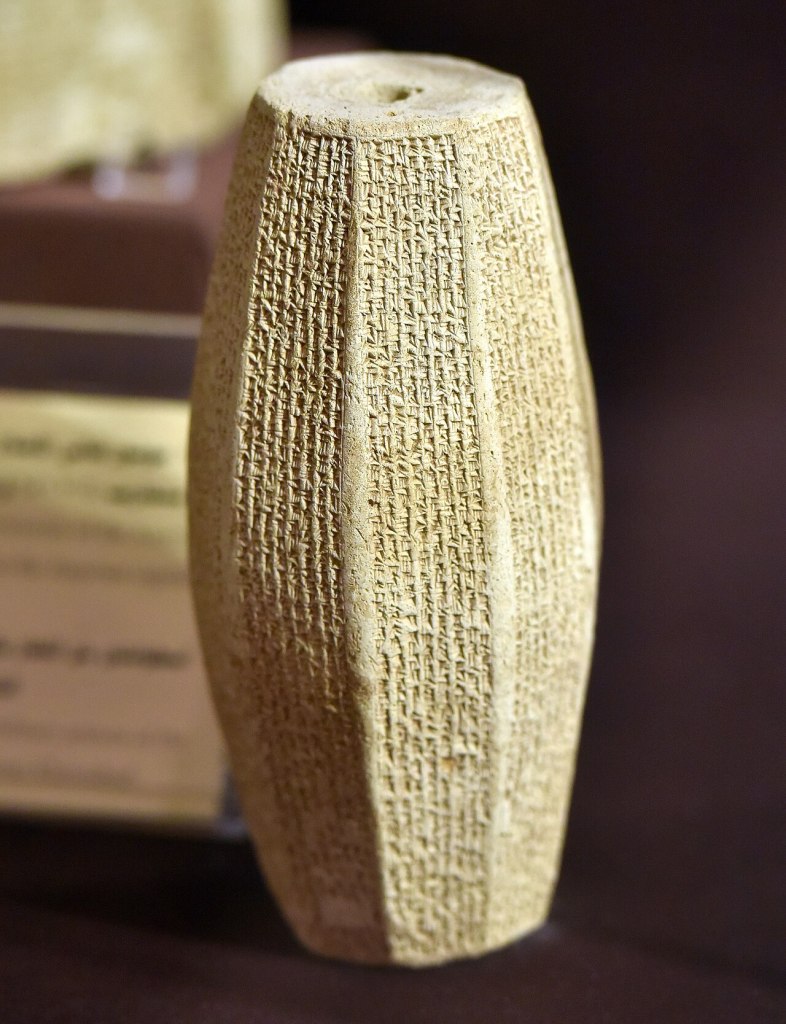
Cyrus’s own inscriptions (especially the Cyrus Cylinder) frame him not as a conqueror, but as a restorer. He claimed to return displaced peoples to their homelands, to rebuild temples, and to honour the gods of those he had conquered. This was a direct reversal of the Assyrian policy of forced deportation and cultural erasure.
Under Darius I, the empire was divided into satrapies, and the Royal Road system was expanded — a clear evolution of the Assyrian model, but one designed for mobility and communication, not just control. The empire’s capital at Persepolis echoed Assyrian grandeur, but replaced images of violence with scenes of tribute-bearing delegates from across the empire, all shown with dignity and harmony.
Lessons from Collapse: What Assyria Taught the World
The Persians rose only a few decades after the catastrophic fall of Assyria in 609 BCE. That fall — sudden, violent, and complete — was not lost on the new empire builders. The destruction of Nineveh, the assassination of kings, the desertion of vassals — all revealed the limits of ruling by fear. Assyria had overreached. Its brutality, once effective, had seeded resentment and rebellion across its provinces.
The Persians learned from this. While they did not avoid military force when needed, they tempered conquest with compromise. They retained local elites, adopted local customs, and allowed a multiplicity of religions and languages to coexist under imperial rule.
They also understood the importance of soft power — the use of art, architecture, and ritual to inspire awe rather than terror. The grand staircases of Persepolis, the inscriptions in multiple languages, and the respectful iconography of subject peoples all signalled a new imperial vision: one where diversity was not merely tolerated, but displayed.
Hidden Continuities: What the Persians Still Borrowed
Despite these ideological differences, Persia could not have become an empire without the Assyrian foundation beneath its feet. It used the same cities (Babylon, Susa, Ecbatana), many of the same road systems, and even inherited scribes trained in Assyrian and Babylonian record-keeping.
Elamite, Babylonian, and Old Persian were the three official imperial languages — a reflection of Assyrian multilingual administration, not tribal simplicity. Persian kings, like Assyrian kings, portrayed themselves as chosen by the gods, possessors of world rule, and patrons of order against chaos.
Even the concept of imperial ideology, where the king is the centre of a cosmic, moral, and political order, was a legacy of Assyria — though reinterpreted in Zoroastrian and Iranian terms.
Conclusion: From Iron Fist to Open Hand
The Achaemenid Empire was not an invention from scratch — it was a careful, deliberate evolution from what had come before. And no predecessor loomed larger than Assyria.
The Persians saw what Assyria had built. They adopted its infrastructure, studied its methods, and used its cities and systems as scaffolding for their own rule. But they also saw what Assyria had destroyed — and what had destroyed Assyria. And in that recognition, they forged a new model of empire: one not of absolute domination, but of structured pluralism.
In rejecting Assyria’s cruelty while building upon its genius, the Persians created a vision of rule that would last longer, reach farther, and leave a more enduring legacy.
Where Assyria ruled with the sword, Persia ruled with the sceptre — and that choice made all the difference.


 Kam Austine
Leave a comment