
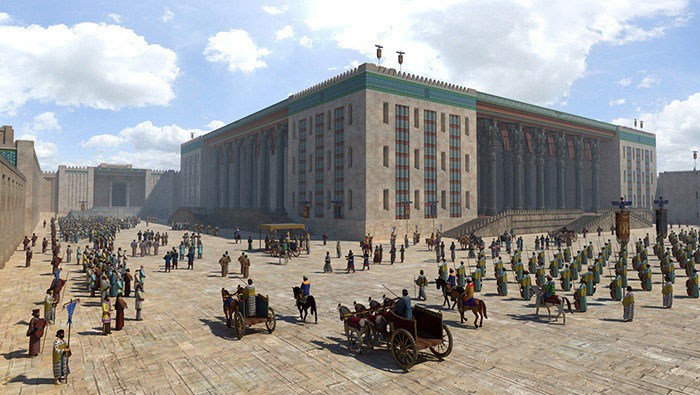
Persepolis was not built to govern an empire. It was built to present one.
Unlike Babylon, Susa, or Ecbatana, Persepolis never functioned as an administrative capital. It produced no archives on the scale of Mesopotamian cities, housed no permanent bureaucracy, and was never a hub of daily governance. Instead, it stood apart — monumental, elevated, ceremonial — a city activated only at particular moments of the imperial calendar. This deliberate separation between power and administration reveals Persepolis for what it truly was: an imperial stage upon which Persian kingship was performed, remembered, and renewed [1].
To understand Persepolis, one must first understand why it replaced Pasargadae — and why that replacement was ideological rather than practical.
Pasargadae and the Charismatic Origins of Persian Rule
Pasargadae was the city of Cyrus the Great, and it reflected the nature of his rule. It was open, dispersed, and personal. Its architecture emphasised gardens, pavilions, and movement rather than enclosure or domination. Cyrus ruled through charisma, moral authority, and coalition-building. His kingship was remembered less through institutions than through reputation [2].
Yet charisma does not outlive the charismatic.
After Cyrus’s death and the troubled reign of Cambyses, the empire entered a period of instability. Revolts spread, legitimacy fractured, and continuity was no longer self-evident. When Darius I seized the throne, he inherited not only an empire but a crisis of authority.
Pasargadae could not solve that crisis. It memorialised Cyrus — but it could not institutionalise kingship.
Persepolis was Darius’s answer.
Darius I and the Need for a New Political Language
Darius did not simply inherit power; he had to justify it. His inscriptions speak insistently of order restored, rebellion crushed, and truth upheld by divine favour. Yet words alone were insufficient. What Darius required was a new spatial language of legitimacy — one that could absorb Cyrus’s memory while transcending it [3].
Persepolis was conceived as that language.
Geographically, its location was significant. Situated near Pasargadae but distinct from it, Persepolis occupied a symbolic middle ground: close enough to claim continuity, distant enough to mark transformation. Politically, it allowed Darius to reposition Persian kingship from personal rule to institutional sovereignty.
Persepolis did not erase Pasargadae. It reframed it.
Why Persepolis Was Not a Capital
The decision not to make Persepolis an administrative capital was intentional. Governance continued in Susa, Babylon, and other centres with long bureaucratic traditions. Persepolis, by contrast, functioned episodically — most likely during Nowruz and other ceremonial occasions when delegations from across the empire assembled [4].
This separation allowed Persepolis to exist outside the compromises of daily rule. There were no tax disputes here, no local petitions, no administrative clutter. What unfolded at Persepolis was ritualised empire: order made visible, hierarchy enacted without violence, diversity displayed without disorder.
In this sense, Persepolis was closer to a temple than a palace — but one devoted to kingship itself.
Architecture as Imperial Grammar
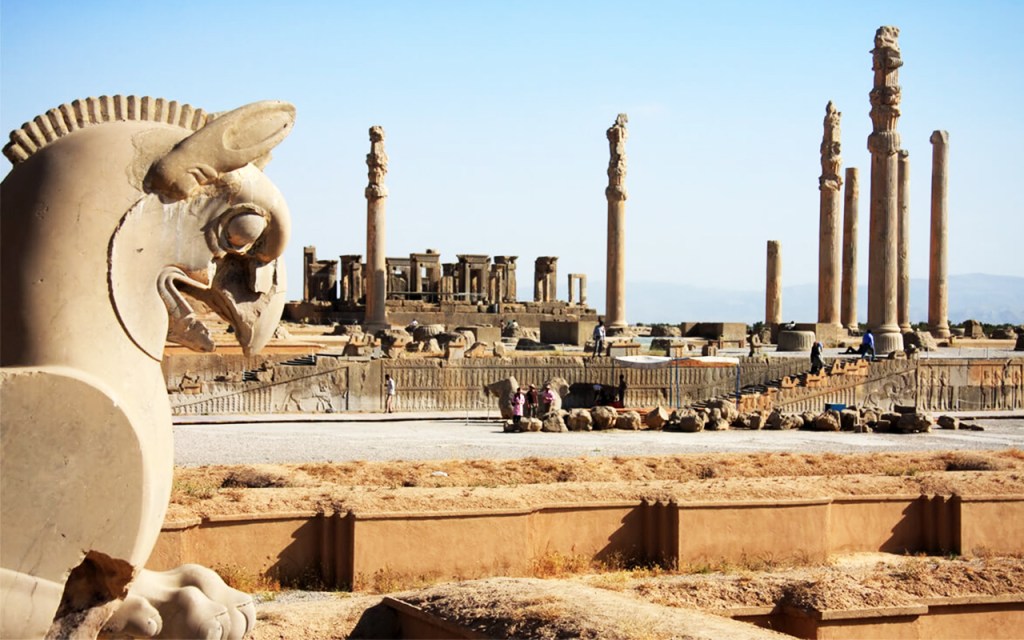
Every architectural choice at Persepolis reinforces this function. Staircases rise gently, allowing processions to move upward without strain. Reliefs unfold horizontally, not vertically, emphasising continuity rather than conquest. No scenes depict battle, defeat, or suffering. Instead, delegations advance calmly, bearing gifts, differentiated by costume but equal in dignity [1].
The Apadana, with its vast audience hall, was not designed for private rule but for public visibility. Here, kingship was displayed as stable, predictable, and eternal. The repetition and symmetry of the reliefs were not decorative habits; they were ideological statements.
Empire, in this vision, was not a moment — it was a rhythm.
Atossa and Dynastic Continuity
At the heart of this rhythm stands Atossa.
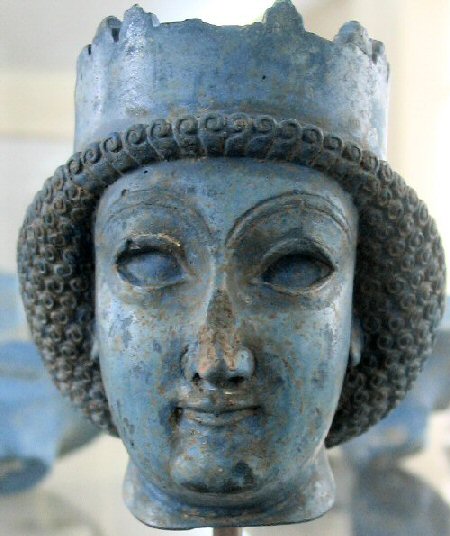
Daughter of Cyrus the Great, wife of Darius I, and mother of Xerxes I, Atossa was uniquely positioned within the Achaemenid dynasty. She embodied continuity across rupture — linking the founder of the empire to its institutional consolidator and to its most expansive ruler [5].
Greek sources portray Atossa as politically active, influential in succession decisions, and deeply embedded in court life. While Persian inscriptions remain silent on her role — as they do for nearly all royal women — her presence at court during the formative decades of Persepolis cannot be dismissed as incidental [6].
Persepolis was a dynastic project spanning multiple reigns. Its legitimacy depended on memory as much as authority. Atossa was living memory.
Through her, Darius’s rule could be framed not as usurpation but as restoration. Through her, Xerxes could inherit not merely power but lineage. Persepolis, as a site of ritual kingship, would have been unimaginable without such continuity.
Xerxes and the Completion of the Imperial Stage
Under Xerxes, Persepolis reached its full ceremonial expression. Construction continued, spaces expanded, and the ritual language of the site intensified. Xerxes’s inscriptions emphasise obedience, order, and divine sanction — themes already embedded in the architecture he inherited [3].
It is during Xerxes’s reign that Persepolis most clearly functions as an imperial theatre. The empire is no longer stabilising; it is performing stability.
Atossa, now the matriarch of the dynasty, occupied a position of symbolic authority. Even if absent from reliefs, her influence shaped the court culture in which Persepolis operated — a culture deeply concerned with legitimacy, continuity, and memory.
A City Outside Time
Persepolis was never meant to evolve organically. It was not a living city but a perfected one. Its reliefs do not narrate events; they repeat ideals. Time here is cyclical, not historical. Each procession is every procession. Each king is every king.
This timelessness was its greatest strength — and its vulnerability.
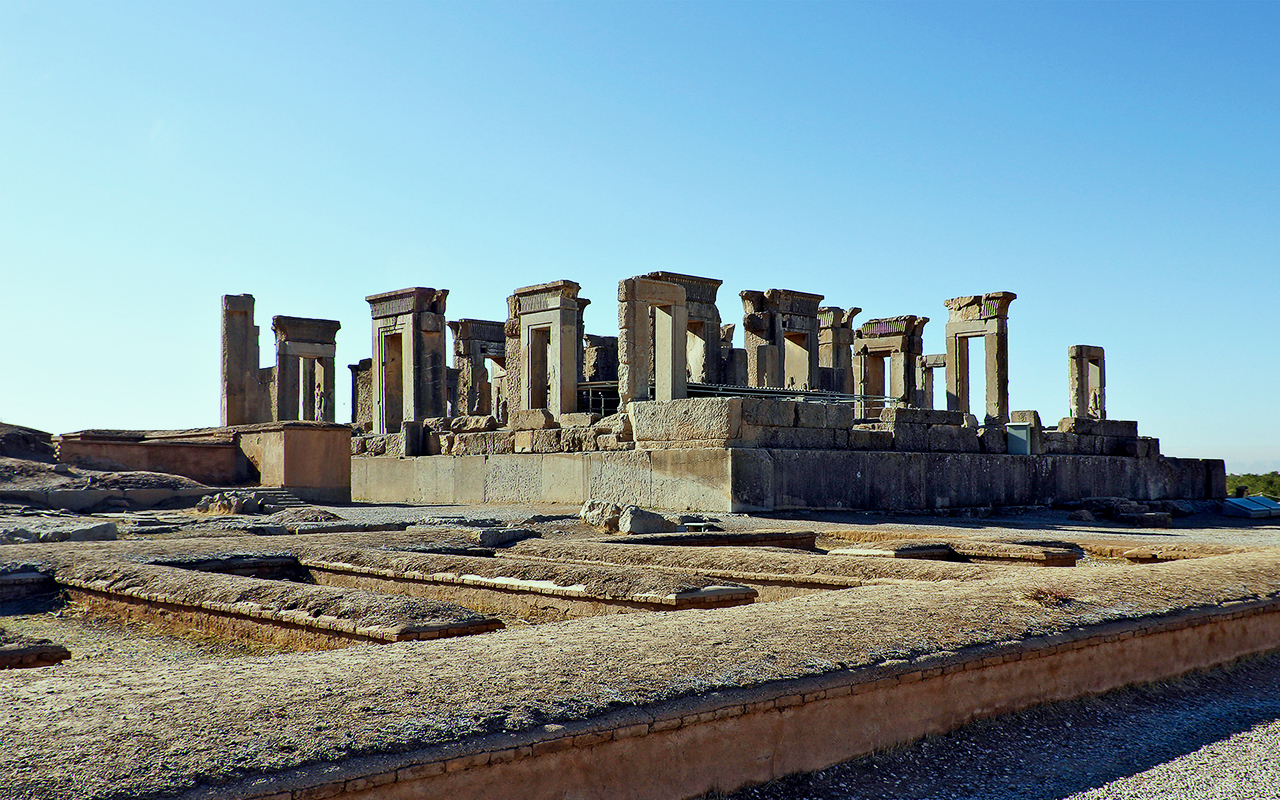
When Alexander captured Persepolis, its destruction was not militarily necessary. It was symbolic. Burning Persepolis meant attacking not administration but ideology. It was an assault on memory itself [7].
The End and the Afterlife
Persepolis fell, but its language endured. Later Iranian empires, from the Sasanians onward, inherited its vision of kingship as cosmic order rather than personal domination. Even in Islamic-era Persian thought, echoes of this worldview persist.
Persepolis had succeeded in its purpose: it taught empire how to remember itself.
Conclusion
Persepolis was not built to rule the world. It was built to explain why the world was ruled.
By moving from Pasargadae to Persepolis, the Achaemenids transformed kingship from charisma into institution, from memory into ritual, from conquest into order. Atossa stood at the centre of this transformation — not as a builder of stone, but as a keeper of dynastic truth.
Only once this stage was set could the reliefs speak.
Footnotes
- Margaret Cool Root, The King and Kingship in Achaemenid Art, Brill, 1979.
- Pierre Briant, From Cyrus to Alexander, Harvard University Press, 2002.
- Darius I & Xerxes I, Royal Inscriptions.
- Amélie Kuhrt, The Persian Empire, Routledge, 2007.
- Encyclopaedia Iranica, “Atossa.”
- Herodotus, Histories, Book III & VII.
- Robin Lane Fox, Alexander the Great, Penguin, 2004.

 Kam Austine
Leave a comment