
Introduction: The Edge of Empire
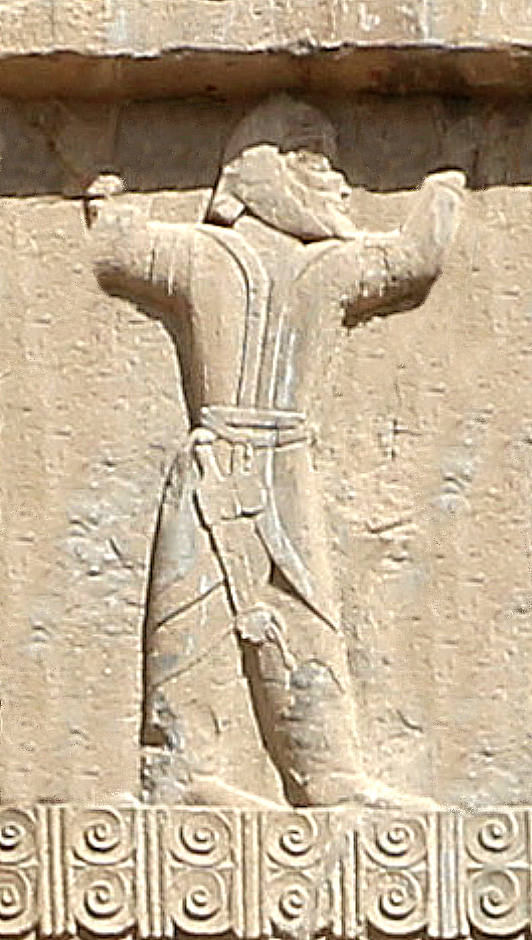
At the northeastern limits of the Achaemenid world lay two regions that were never merely peripheral: Sogdiana and Hyrcania. Stretching from the Oxus basin to the forests along the Caspian, these lands formed a frontier of encounter—with mobile steppe societies, with long-distance trade, and with ideas moving between Iran and Inner Asia.
If Persepolis expressed imperial order in stone, and Susa coordinated it administratively, Sogdia and Hyrcania tested it in motion. Here, the empire confronted resistance, adapted its governance, and absorbed influences that would shape its military practice, economic reach, and—more subtly—its religious imagination.
Geography and Strategic Position
Sogdiana occupied a crucial zone between the Iranian plateau and the Inner Asian steppe, centred on the Oxus (Amu Darya). Hyrcania lay to the southwest, along the southern Caspian littoral, where dense forests met mountain corridors. Together, they formed a hinge between settled imperial territories and the open steppe.
This geography created both opportunity and vulnerability. It enabled:
- access to transcontinental routes linking east and west;
- movement of goods, animals, and skilled intermediaries;
- seasonal corridors used by pastoral groups.
At the same time, it exposed the empire to mobile adversaries who were not easily contained by fixed borders. As a result, these regions demanded a form of governance that was responsive, networked, and militarily agile.[1]
Nomads and Imperial Pressure
Classical sources refer to groups north and northeast of the empire—often labelled broadly as Scythians—whose mobility and tactics posed a persistent challenge. These were not simple “invaders” but neighbouring societies with different political forms, capable of raiding, retreating, and reassembling beyond the reach of conventional armies.
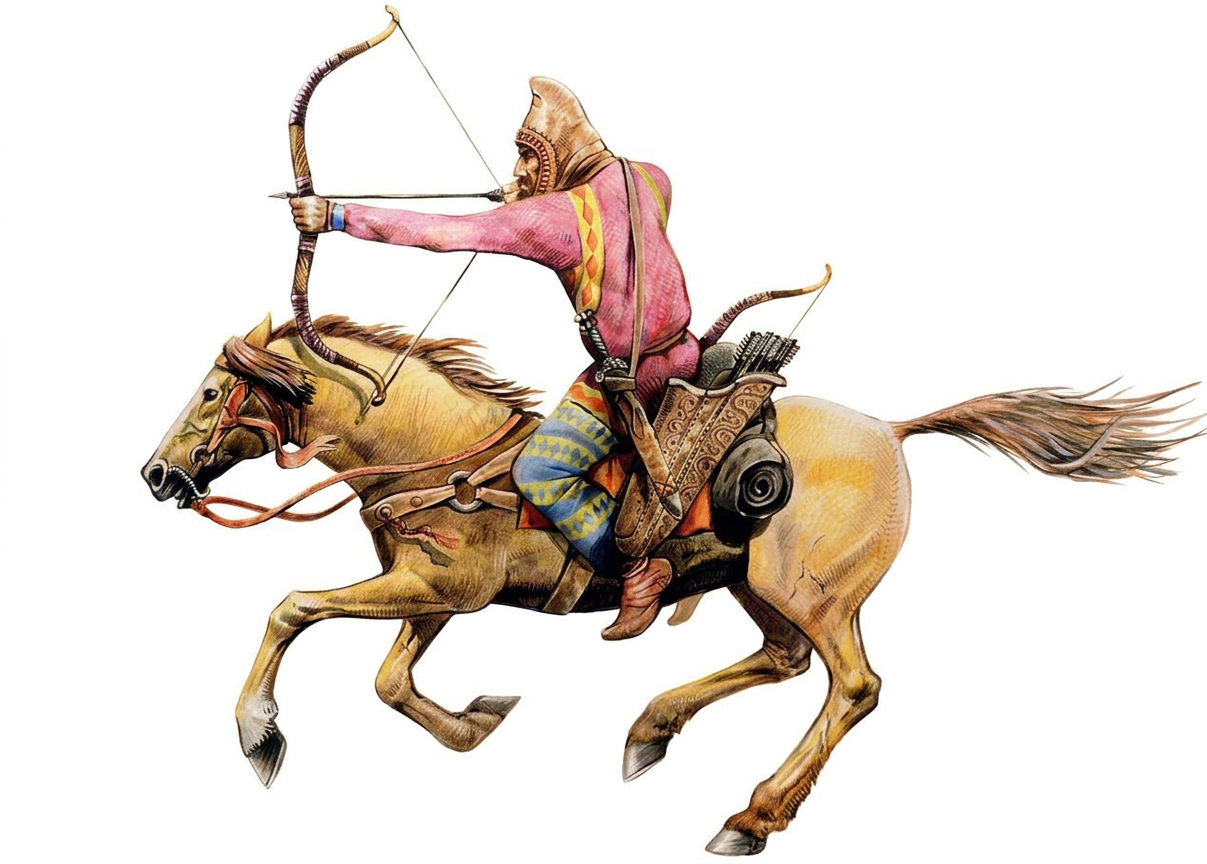
Achaemenid responses in these regions reveal adaptation rather than simple confrontation:
- increased reliance on cavalry and reconnaissance;
- development of relay-based communication to track movement;
- fortified nodes and garrisoned corridors linking satrapal centres.
Frontier pressure thus accelerated the evolution of imperial practice. It pushed the state to treat information and speed as strategic assets, not merely numbers of troops.
Rebellion and Control Under Darius
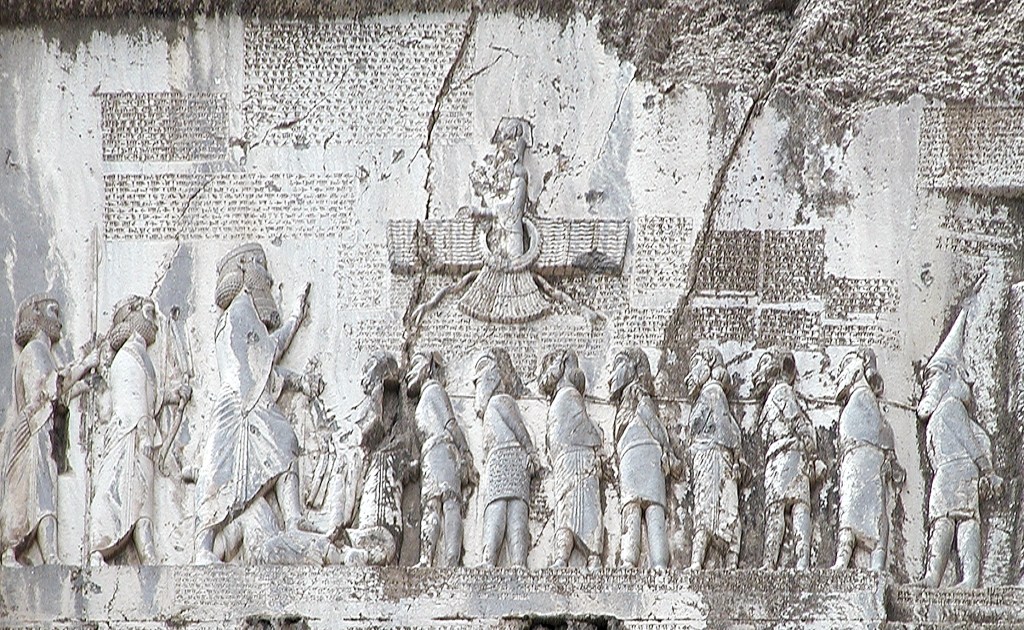
The early reign of Darius I was marked by instability across several regions. The Behistun Inscription records a series of revolts that Darius claims to have subdued, including unrest in eastern territories connected with Parthia and Hyrcania.[2]
These episodes underline a central point: the northeastern frontier was politically active, not marginal. Control here required more than force. It required:
- reliable lines of communication between centre and satrapies;
- integration of local elites into imperial structures;
- a shared language of legitimacy that framed rebellion as deviation from order.
Darius’ inscriptions consistently oppose truth (asha) to the lie (drauga), recasting political dissent as moral disorder. On the frontier, where authority was most tested, this language became a tool of cohesion.
Roads, Communication, and Integration
While the celebrated western trunk of the Royal Road ran from Sardis to Susa, eastern branches extended toward Central Asia, linking Sogdia and Hyrcania into the imperial network. These routes were not always monumental highways; often they were corridors of movement, sustained by stations, couriers, and local knowledge.
Through them, the empire achieved:
- administrative reach, enabling orders to travel quickly;
- economic flow, connecting regional production to wider markets;
- military responsiveness, allowing redeployment and intelligence sharing.
On this frontier, the distinction between road, post, and patrol blurred. Infrastructure functioned as a single system of coordination, where governance depended on movement as much as on decree.[3]
Economic Life and Exchange
Sogdia would later become famous for its merchant networks, but even in the Achaemenid period the region participated in long-distance exchange. Goods, animals, and techniques circulated along routes that prefigure later Silk Road patterns.
Hyrcania, with its varied ecology, supported agriculture and provided resources that fed into imperial supply systems. The broader northeastern zone contributed to an economy characterised by:
- regional specialisation;
- integration through tribute and exchange;
- the movement of high-value items across great distances.
Connections to the plains of Media also link this frontier indirectly to the breeding grounds of the renowned Nisean horse, animals associated with prestige and imperial cavalry. In this way, frontier regions were tied into the symbolic economy of the empire as well as its material one.
Cultural and Intellectual Exchange
Frontiers are rarely one-way boundaries. They are zones of translation. In Sogdia and Hyrcania, languages, practices, and beliefs encountered one another and adapted. Administrative habits from the imperial core met local traditions; mobile groups interacted with settled populations; ideas moved alongside goods.
This environment favoured:
- multilingual competence;
- flexible administrative practices;
- the gradual spread and reinterpretation of religious concepts.
While we must be cautious not to overstate direct lines of influence, such regions provide plausible settings in which early Iranian religious ideas could be preserved, reshaped, and transmitted.
Vishtaspa, the Magi, and Religious Transmission
The religious dimension of this frontier is closely tied to questions surrounding Hystaspes and the figure of Vishtaspa known from Zoroastrian tradition. The historical Hystaspes, Darius I‘s father is associated with eastern satrapies, including Parthia and Hyrcania, placing him within the very regions under discussion.[4]
Whether he is to be identified with the Vishtaspa of religious texts remains debated. Most scholars treat them as distinct figures. Yet the overlap in name, geography, and period has long invited comparison.
Within this context, the Magi—a priestly group of Median origin—likely played a role in maintaining and transmitting ritual knowledge. Their presence at court and across the empire suggests that religious ideas did not spread solely through texts, but through practice, instruction, and proximity to power.
A Reflective Note on Vishtaspa (Author’s Perspective)
It is difficult to ignore the coincidence that the explicit and repeated invocation of Ahura Mazda becomes prominent precisely during the reign of Darius I. While definitive identification cannot be established, one may reasonably consider the possibility that the historical Hystaspes, Darius’s father—active in the eastern regions—was connected, directly or indirectly, to traditions associated with Vishtaspa. The convergence of geography, political influence, and the timing of religious emphasis suggests that the eastern satrapies may have played a role in shaping the religious articulation of the Achaemenid state.
This interpretation remains speculative, yet it offers a coherent way to understand how religious ideas, once regional or loosely structured, could become central to imperial ideology within a relatively short period.
I entertained this idea in my Upcoming Book: The Princess of Pasargadae
Conclusion: The Frontier as Foundation
Sogdia and Hyrcania were not edges in the sense of marginality. They were edges in the sense of contact and transformation. Here, the Achaemenid Empire encountered forces it could not fully control, and in responding to them, it refined its own systems—military, administrative, and conceptual.
Through roads and relay networks, through satrapal governance, and through the quiet work of cultural exchange, these regions became integral to the functioning of empire. They remind us that imperial strength does not reside only in its centres, but also in the places where it is most challenged.
On this frontier, Persia did not merely defend itself. It learned, adapted, and extended its reach—carrying with it ideas that would shape its identity as much as its territory.
Footnotes
[1] Briant, P. From Cyrus to Alexander: A History of the Persian Empire. Eisenbrauns, 2002.
[2] Darius I, Behistun Inscription.
[3] Kuhrt, A. The Persian Empire: A Corpus of Sources from the Achaemenid Period. Routledge, 2007.
[4] Boyce, M. Zoroastrians: Their Religious Beliefs and Practices. Routledge, 1979.


Leave a comment