
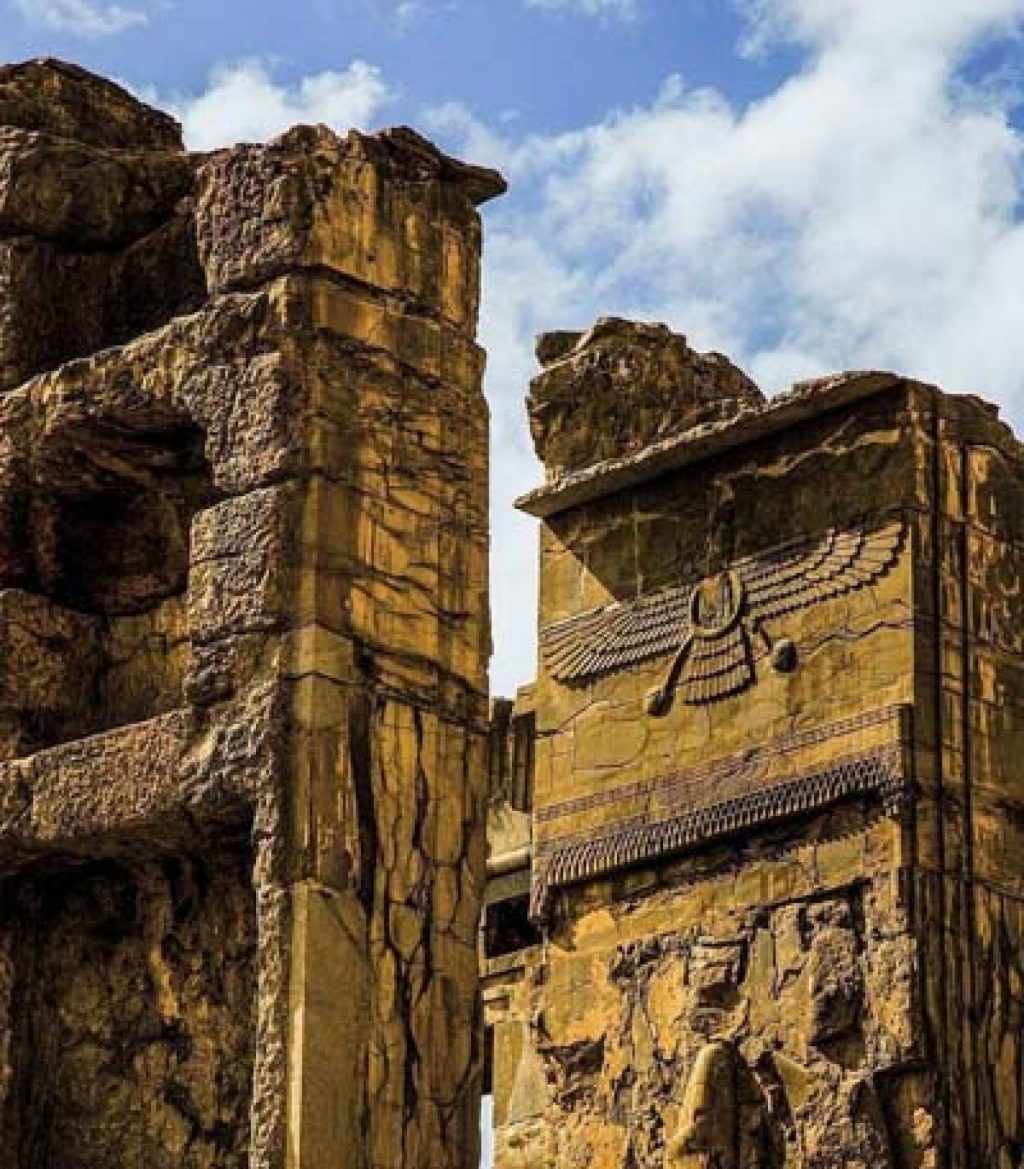
Empires speak in many languages. They speak in stone through architecture, in ritual through procession, in theology through reliefs. But they also speak in metal.
The Achaemenid Empire did not merely rule through spectacle; it ruled through circulation. Across thousands of kilometres—from Anatolia to the Indus—Persian authority travelled in small, dense discs of gold and silver. These coins, known today as the daric (gold) and the siglos (silver), were not merely instruments of trade. They were instruments of cohesion.
If Persepolis shows us how Persia imagined power, the daric reveals how it moved.
Before Coinage: Tribute and Metal as Weight
Before Darius I introduced imperial coinage, the Achaemenid economy functioned primarily through weighed bullion, tribute, agricultural taxation, and redistribution. Silver and gold circulated as measured weight rather than standardised stamped units [1].
This system worked within regional contexts. Mesopotamia, for example, already possessed highly developed silver-weight economies. But as the empire expanded westward into Lydia and Ionia—regions familiar with coinage—the absence of imperial standardisation created friction.
Coinage was not invented by Persia. It was inherited from Anatolia, particularly from Lydia under Croesus. What Darius did was something more ambitious: he transformed coinage from a regional innovation into an imperial instrument.
The Introduction of the Daric
Around the late 6th century BCE, during the reign of Darius I, a standardised gold coin began circulating across the empire. Modern scholars call it the daric, derived from the Old Persian name of Darius (Dārayavahuš), though the precise contemporary term remains debated [2].
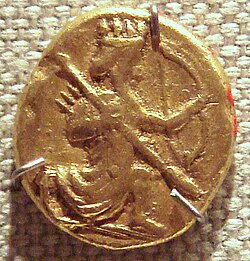
The daric typically weighed around 8.4 grams of high-purity gold. Its design was remarkably consistent: a Persian king, sometimes described as a “running archer,” depicted in a stylised pose holding a bow and spear.
This was no neutral currency. The coin carried a royal image.
Unlike Greek coinage, which often depicted city emblems, deities, or civic symbols, the daric displayed the king. The empire stamped its sovereign presence directly into daily exchange.
The Siglos: Silver for Circulation
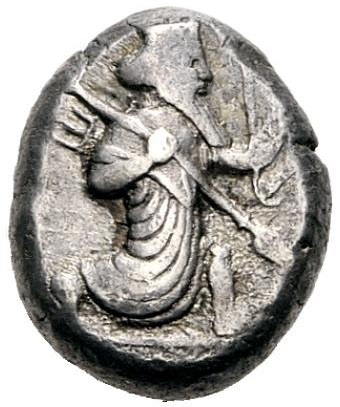
Alongside the gold daric circulated the silver siglos, approximately one-twentieth the value of a daric. While the gold coins were used in large-scale payments, tribute settlements, and elite transactions, the silver siglos enabled broader commercial exchange [3].
Together, they formed a bimetallic system that allowed:
- Payment of soldiers
- Settlement of tribute
- Long-distance trade
- Administrative transfers
More importantly, they allowed standardisation.
In an empire spanning multiple linguistic, cultural, and economic systems, standardisation is not trivial. It reduces friction. It builds trust. It creates predictability.
The daric and siglos were not simply money; they were portable order.
Coinage as Political Messaging
The image of the king as archer deserves attention. The pose is dynamic but controlled. The king is neither enthroned nor charging; he is poised.
This imagery mirrors the reliefs of Persepolis in miniature form. Just as the monumental architecture projects ritual stability, the coin projects disciplined authority. There is no narrative scene, no enemy, no conquest. The king is a symbol of vigilance and readiness.
The coin thus becomes a theological object as well as an economic one. Each exchange becomes a small reaffirmation of imperial legitimacy.
In this sense, Persian coinage differs sharply from later Hellenistic practice, where rulers personalised coinage with individualised portraits. The Achaemenid image remains stylised, almost anonymous. It represents kingship, not personality [4].
The Royal Road and Monetary Flow
Coinage without infrastructure is inert. The Royal Road and its eastern extensions provided the arteries through which darics and sigloi travelled.
From Sardis to Susa, from Babylon to Arachosia, coins moved alongside caravans, officials, and delegations. Trade in textiles, spices, metals, timber, and luxury goods required reliable exchange systems. The daric became the lingua franca of high-value transactions [5].
This integration was particularly important in regions such as Anatolia and the Indus frontier, where pre-existing trade networks could now operate under a shared monetary standard.
The empire did not erase local currencies; it overlaid them with imperial coherence.
Redistribution and the Imperial Treasury
Persepolis tablets reveal a sophisticated redistributive economy. Workers, artisans, and labourers were often paid in rations—grain, wine, livestock—rather than coin. Yet large-scale payments, military campaigns, and tribute transfers required metal [6].
The imperial treasury functioned as both repository and redistributor of wealth. Tribute flowed inward; payments flowed outward. Coinage made this system more fluid.
Importantly, this was not capitalism in the modern sense. The Persian economy remained fundamentally agrarian and redistributive. Coinage enhanced the system; it did not replace its foundation.
Darics Beyond Persia
One of the most revealing aspects of Persian coinage is how widely it circulated. Darics have been found far beyond the core Persian territories, particularly in Greek contexts. Greek mercenaries serving in Persian armies were often paid in darics. Over time, the coin gained such prestige that “daric” became synonymous with wealth in Greek literature [7].
This reveals something subtle but powerful: Persia’s monetary system outlived political hostility. Even enemies used Persian gold.
When Alexander conquered the Persian Empire, he inherited enormous quantities of darics and bullion from Persian treasuries. The monetary infrastructure he relied upon was Persian before it was Macedonian.
Metal as Imperial Memory
Coins are durable. They survive regimes. Unlike inscriptions carved into a single location, coins travel. They embed imperial identity in foreign soil.
A daric buried in Anatolia, lost in Mesopotamia, or exchanged in Gandhara carried with it a fragment of imperial presence. It made Persia visible without armies.
In this sense, the daric and siglos were among the most subtle tools of Achaemenid integration. They unified economies without forcing cultural homogenisation.
Why Darius Introduced Coinage When Cyrus Did Not
The difference between Cyrus and Darius is revealing.
Cyrus ruled through charisma and coalition. His empire expanded rapidly and relied heavily on tribute relationships. Darius, inheriting instability and rebellion, needed systematisation. Coinage was part of a broader administrative reform that included satrapal reorganisation, taxation recalibration, and infrastructure expansion [1].
Coinage signalled maturity. It marked the shift from expanding empire to structured empire.
Economic Power Without Excess Display
Unlike later empires that flooded coinage with elaborate iconography or propagandistic imagery, Persian coins remain restrained. The design changes little across decades. This consistency mirrors the repetition of Persepolis reliefs.
Power is not dramatised; it is standardised. The daric’s simplicity reinforces trust. It promises reliability rather than spectacle.
Conclusion: The Sound of Empire
When struck against a table or counted into a purse, the daric produced a clear metallic note. That sound echoed across markets, military camps, and treasuries from the Aegean to the Indus.
Empires rise in battle and endure in ritual. But they function through circulation.
The daric and siglos were not merely currency. They were the audible pulse of Achaemenid order — small, portable affirmations that the empire was stable, predictable, and present.
Long after Persepolis burned, Persian gold continued to speak.
Footnotes
- Pierre Briant, From Cyrus to Alexander, Harvard University Press, 2002.
- Encyclopaedia Iranica, “Daric.”
- Amélie Kuhrt, The Persian Empire, Routledge, 2007.
- Margaret Cool Root, The King and Kingship in Achaemenid Art, Brill, 1979.
- Herodotus, Histories, Book V.
- Persepolis Fortification Tablets (various editions).
- Xenophon, Anabasis.


Leave a Reply