
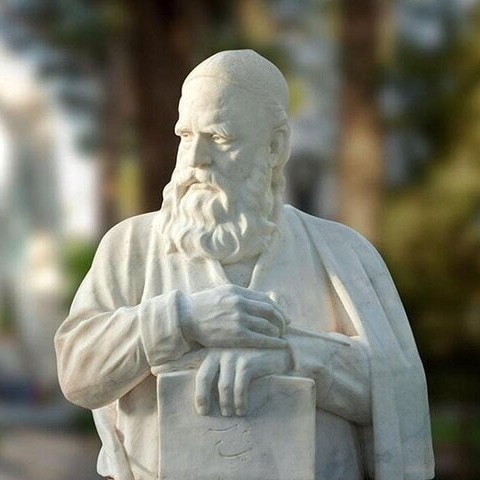
Khayyam’s Philosophy Series
Kam Austine
I. The Human Condition Beneath the Vaulted Sky
Across the scattered quatrains attributed to Khayyam, a pattern slowly reveals itself. Certain poems do not merely speak of wine, love, or passing time; they circle persistently around deeper questions — origin, fate, knowledge, and death. When placed side by side, they form a constellation of thought. They do not construct a formal doctrine, yet they outline a condition. That condition is unmistakably existential.
Khayyam does not begin with moral instruction or theological certainty. He begins with bewilderment. Human beings appear in his poetry not as sovereign agents directing their destiny, but as participants in a vast, indifferent order. They are cast into motion without consultation, born without explanation, and destined for dissolution without appeal. The heavens move; the potter shapes; the wheel turns — and we find ourselves already inside the process.
This recurring vision does not produce despair. It produces lucidity. Khayyam’s voice is neither sentimental nor rebellious. It is observational. He describes the human situation as one might describe a landscape: with clarity, restraint, and an absence of ornament. What unsettles the reader is not exaggeration, but proportion. The cosmos is immense; human understanding is limited; death is certain. Between these three facts, a philosophy emerges.
Unlike later existential thinkers, Khayyam does not ground meaning in radical freedom or subjective creation. His universe is structured, governed, and often deterministic. The problem is not chaos; it is opacity. The world appears ordered, yet its purpose remains concealed. The intellect strives upward — to Saturn’s height, to the secrets of the spheres — and yet returns unanswered. Even the most disciplined inquiry cannot pierce the final veil.
In this sense, Khayyam’s existentialism is not born from anxiety alone, but from intellectual honesty. He refuses to fill the silence of the universe with comforting fictions. If the origin is unknown, he says so. If the end is certain yet unexplained, he accepts it. If the promised explanations lack coherence, he challenges them.
What emerges is not a system, but a posture: a way of standing within existence without illusion. The quatrains that gather around themes of fate, knowledge, and mortality reveal a thinker who understood that the deepest human question is not “What should we believe?” but “What does it mean to be here at all?”
It is from this ground that Khayyam’s existential vision unfolds.
II. Thrown Into the Game
We are but game pieces, and the heavens play;
This is plain truth, not metaphor or say;
On existence’ board we’re cast and moved about,
Then fall, one by one, to nonexistence’ tray.
Few images in Khayyam are as stark as this one. The human being is not a strategist but a piece — handled, displaced, and finally removed. The metaphor of the game is ancient, yet Khayyam’s insistence that it is “plain truth, not metaphor” transforms it from poetic device into ontological claim. He is not merely comparing life to a game; he is declaring that this is the structure of our condition.
The board is existence itself. The pieces are individual lives. The player is unnamed but implied — the heavens, fate, or the governing order of the cosmos. Movement occurs, but not by our choosing. We advance, retreat, collide, and fall, yet the logic of these motions does not originate within us. The game unfolds according to rules inaccessible to the pieces themselves.
What is striking is the absence of protest. There is no dramatic rebellion, no plea for autonomy. Khayyam does not lament injustice; he describes mechanism. The emphasis falls on inevitability. Each piece is eventually lifted and returned to the “tray” of nonexistence. The final image is quiet and absolute. There is no grand finale — only removal.
This vision introduces one of the central tensions in Khayyam’s thought: the coexistence of motion and powerlessness. We are active, yet not autonomous. We participate, yet do not initiate. The game metaphor captures this paradox with precision. From within the board, it may appear that we choose our moves; from above, the pattern may reveal otherwise.
Such imagery anticipates later reflections on human “thrownness” into a world not of our making. Yet Khayyam’s version is less psychological and more cosmological. The emphasis is not on individual angst, but on structural placement. We are inserted into a pre-existing order, subject to forces that exceed comprehension.
This does not reduce life to triviality. On the contrary, the seriousness of the image lies in its refusal to flatter. If existence is structured like a game, then human significance cannot rest on control. It must rest elsewhere — perhaps in awareness, perhaps in dignity under motion, perhaps in lucidity about the board itself.
By stripping away the illusion of authorship, Khayyam forces a more demanding question: if we are pieces, how shall we stand while still upon the board?
III. The Limits of Knowledge
If Khayyam’s existential vision begins with the loss of control, it deepens with the recognition of intellectual limits. His thought repeatedly returns to a simple but radical admission: human understanding has boundaries it cannot cross. These boundaries are not temporary gaps awaiting discovery. They are structural. The human mind encounters them not through laziness, but through earnest inquiry.
Khayyam was no stranger to rigorous thought. He measured, calculated, and examined the architecture of the cosmos with mathematical precision. Yet the more disciplined the inquiry, the clearer the horizon became. Certain questions resist closure: What precedes existence? What follows it? What intention governs it? The intellect may ascend toward the heavens, but it does not penetrate their final silence.
This epistemic humility finds sharp expression in one of his most direct quatrains:
The secrets of eternity — neither you know nor I;
This enigmatic discourse — neither you read nor I.
Behind the veil lies the conversation of you and I,
But when the veil lifts, neither you remain nor I.
The symmetry of the lines is deliberate. Neither you nor I. Neither reader nor scholar. Ignorance is universal, not selective. The “veil” is not merely a poetic symbol; it marks a threshold beyond which discourse ceases. Even if there is a hidden order — a “conversation” beyond perception — the moment of its revelation coincides with the disappearance of the participants. Knowledge dissolves with the knower.
This limit is not confined to metaphysical secrets; it extends to time itself. Khayyam repeatedly suggests that the structure of coming and going offers no accessible beginning and no visible terminus. We witness cycles — birth and death, ascent and decline — yet the first cause and final aim remain concealed. At the midpoint of this reflection, he gives voice to that same tension:
The cycle that contains our coming and our going round
Shows neither first beginning nor last end to be found;
No voice speaks truly on this mystery:
From whence we enter, and to where we’re downward bound.
The image of the cycle reinforces closure without clarity. Motion is observable; origin is not. Departure is certain; destination is obscure. No authoritative voice resolves the mystery. And importantly, Khayyam does not attempt to invent one.
What emerges is not scepticism born of frustration, but restraint born of honesty. He refuses to fill the silence with comforting constructions. The human condition unfolds within an interval between two unknowns. We stand in the middle of a cycle whose boundaries we cannot see.
This is the core of Khayyam’s existential epistemology: the recognition that intellectual reach does not equal ultimate access. The heavens may be measured, but they are not fully explained. The cycle may be traced, but not anchored. And within that suspension, human life proceeds — lucid, finite, and aware of its own limits.
IV. Mastery Without Escape
If Khayyam insists on the limits of knowledge, he does so not as an outsider to learning, but as one who had reached its heights. This distinction matters. His epistemic humility is not born of ignorance; it emerges from intellectual achievement. He knew what it meant to calculate celestial movements, to untangle mathematical riddles, to push thought toward its furthest horizon. And yet, at the summit of inquiry, he discovered something immovable.
The human mind can penetrate patterns. It can solve equations, predict eclipses, chart planetary paths. It can ascend from dust to Saturn. But it cannot annul mortality. The ultimate boundary is not cognitive but existential. No refinement of reason dissolves death.
This tension finds concentrated expression in one of his most striking quatrains:
From dust’s low realm to Saturn’s utmost height,
I solved the riddles of the heavens’ might;
I slipped all snares of cunning and deceit—
Save death’s own fetter, which no man brings to light.
The arc of the first two lines is triumphant. From earth to the furthest visible sphere, he claims intellectual conquest. The phrase is not metaphorical boasting; it reflects genuine scientific accomplishment. He mastered systems, exposed illusions, escaped traps of faulty reasoning. Knowledge, in its proper domain, yielded to discipline.
And yet the final line reverses the ascent. Death remains unmastered. Not merely unexplained — unescaped. It is called a “fetter,” a binding that no ingenuity can loosen. The contrast is deliberate: human intellect may overcome deception, but it cannot overcome termination.
Here Khayyam introduces a profound existential asymmetry. Knowledge expands; life contracts. Mastery increases; time decreases. The more clearly one understands the mechanics of the cosmos, the more sharply one perceives the inevitability of one’s own disappearance. Scientific clarity does not produce existential security; it intensifies awareness of finitude.
This recognition distinguishes Khayyam from both naive optimism and theatrical despair. He does not conclude that knowledge is useless. He affirms its power. But he refuses to exaggerate its reach. Intellectual brilliance does not grant exemption from mortality. The scholar and the fool share the same endpoint.
In this light, Khayyam’s existential posture becomes clearer. The tragedy is not that humans know nothing. It is that they can know so much — and still confront the same boundary. Death is the one equation that remains unsolved, not because it lacks data, but because it lies beyond solution.
Thus mastery, though real, does not translate into escape. The heavens may yield their patterns; the grave does not yield its silence. And in that contrast lies one of Khayyam’s most enduring insights: the measure of wisdom is not how much one conquers intellectually, but how lucidly one stands before what cannot be conquered at all.
V. Death as the Only Certainty
If Khayyam’s reflections on existence reveal limits of control and limits of knowledge, they converge ultimately on a single boundary that admits no ambiguity: death. Among the many uncertainties that structure human life — origin, purpose, destiny — mortality alone remains beyond dispute. It is the one horizon shared by every piece upon the board.
Earlier we encountered Khayyam’s striking image of existence as a cosmic game, where human beings move across the board only to be removed in time. The calmness of that image is deliberate. Death does not appear as a dramatic rupture but as a structural feature of the order itself. Each life participates in motion for a brief interval and then disappears, while the board remains and the game continues.
What makes this boundary especially significant in Khayyam’s thought is the contrast it creates with everything else. While death stands as a certainty, the beginnings and endings of existence remain obscured. As we saw in his reflections on the hidden cycle of coming and going, neither the first origin nor the final destination of the cosmos is available to human knowledge. We observe the movement of life, but not the source from which it begins or the place toward which it ultimately returns.
This asymmetry defines the existential condition Khayyam describes. Human life unfolds between two unknowns — an unseen beginning and an unseen continuation — yet the closing point within that interval is unmistakable. Mortality is the one fact that does not require speculation, doctrine, or argument.
Even the achievements of the intellect do not alter this boundary. As Khayyam himself suggests in his reflections on intellectual mastery, one may ascend through the sciences, solve celestial riddles, and escape many traps of reasoning, yet death remains beyond solution. Knowledge expands; life contracts. The mind may reach Saturn, but the body returns to dust.
For Khayyam, this recognition does not produce despair but clarity. The certainty of death strips away the illusion of permanence and exposes the fragile duration of human presence. When the end of the game is unavoidable, the meaning of existence cannot lie in indefinite continuation. It must be sought within the limited span in which awareness itself is possible.
Thus mortality becomes the fixed point around which Khayyam’s existential reflections revolve. The origin of the cosmos may remain veiled, and its ultimate purpose unresolved, but the horizon of death stands plainly before us. In a universe of unanswered questions, it is the one answer already given.
VI. Is Khayyam Nihilistic?
At first glance, the worldview emerging from Khayyam’s quatrains may appear bleak. Human beings seem powerless within a cosmic order they did not choose. The origins of existence remain unknown, the ultimate destination hidden, and death stands as the one undeniable certainty. To many readers, such a picture invites a familiar conclusion: that Khayyam must therefore be a nihilist, a thinker who denies meaning altogether.
Yet this interpretation misunderstands both his method and his aim.
Nihilism begins by asserting that nothing possesses value or significance. Khayyam does not make such a claim. Instead, he dismantles claims that pretend to possess certainty without justification. The difference is subtle but decisive. His scepticism is directed not at existence itself, but at the confident explanations that human institutions construct around it.
Throughout the quatrains we have examined, Khayyam does not deny that the universe may possess order, intention, or meaning. What he denies is that these realities are accessible to human certainty. The veil remains. Speculation may flourish, but it cannot cross the boundary of proof. In this sense, his thought is less a rejection of meaning than a refusal to fabricate it.
This distinction explains why Khayyam’s poetry often alternates between philosophical lucidity and moments of celebration. If ultimate explanations remain uncertain, the immediate experience of life becomes all the more vivid. The beauty of companionship, the warmth of conversation, the taste of wine, the simple fact of being present in the world — these are not illusions to him. They are the few realities that lie within the human horizon.
Rather than denying value, Khayyam relocates it. Meaning is not secured through metaphysical guarantees or promises of distant reward. It arises within the lived moment itself, within the brief interval between birth and death. The awareness of finitude sharpens rather than diminishes this value. A life known to be temporary becomes more precious, not less.
In this sense, Khayyam’s philosophy may be described not as nihilistic but as lucid. It removes the scaffolding of illusion without collapsing the structure of existence. What remains is a sober acceptance of limits combined with a deep appreciation of the experiences available within those limits.
The courage of Khayyam’s thought lies precisely here. He refuses both despair and consolation. Instead, he invites the reader to inhabit the world honestly — aware of what cannot be known, conscious of what cannot be escaped, and attentive to what can still be lived.
VII. The Courage of Clarity
When the scattered quatrains are viewed together, Khayyam’s philosophy begins to reveal its underlying posture. It is not a system built from rigid propositions, nor a theology supported by doctrine. It is a stance toward existence itself — one shaped by intellectual honesty, restraint, and an unwillingness to substitute certainty where none can be justified.
Across the reflections we have examined, several features emerge with remarkable consistency. Human beings appear within a vast and ordered cosmos whose ultimate purpose remains concealed. The mind can investigate the heavens, calculate their movements, and construct powerful models of the world, yet the final origin and destination of existence remain beyond its reach. Knowledge advances, but it does not dissolve the veil.
At the same time, human life unfolds within unmistakable boundaries. We arrive without knowledge of our beginning, move briefly through the world, and depart in the certainty of death. Mortality provides the only fixed horizon in an otherwise uncertain landscape. It is the single point at which speculation ends and reality asserts itself.
Yet Khayyam’s response to this condition is neither despair nor resignation. Instead, he embraces a form of intellectual courage. Rather than filling the unknown with comforting stories, he allows the limits of knowledge to stand. Rather than denying the inevitability of death, he accepts it as the defining contour of life. Clarity replaces illusion, and honesty replaces consolation.
This clarity carries ethical implications. If the ultimate structure of the cosmos remains hidden, then the value of life cannot depend on promises that lie beyond human verification. Meaning must be sought within the lived interval itself — in awareness, companionship, thought, and the simple fact of being present in the world for a brief time.
Seen in this light, Khayyam’s existential vision is not destructive but liberating. By removing the burden of false certainty, it allows the individual to stand within existence without fear of violating an unknowable cosmic plan. The task becomes simpler and more demanding at once: to live lucidly, to recognise the limits of knowledge, and to inhabit the brief span of life with honesty and attentiveness.
For Khayyam, wisdom does not lie in solving the riddle of the universe. It lies in recognising that the riddle may not be solvable — and in continuing to live with dignity nonetheless. The heavens may remain silent, the veil may remain drawn, and death may await every traveler. Yet within that fragile interval between dust and dust, the human mind still possesses one enduring freedom: the freedom to see clearly.
And for Khayyam, that clarity itself is a form of triumph.
Published as Part of the Khayyam’s Philosophy Series — The Omar Khayyam Project

 Kam Austine
Leave a comment