
Introduction: A City Before Empire
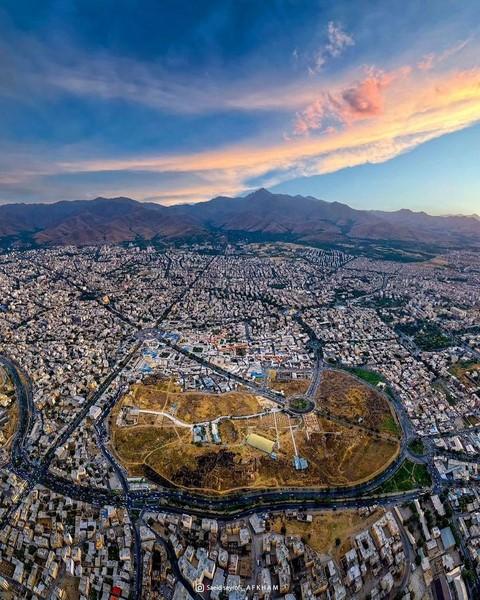
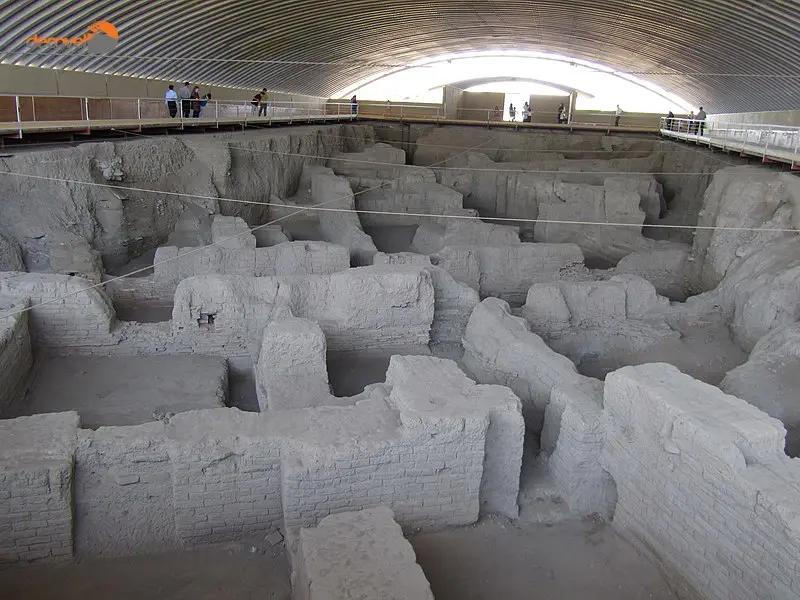
Long before the rise of the Achaemenid Empire, the city of Ecbatana—known in Old Persian as Hagmatana—stood as the political and symbolic heart of the Median kingdom. Situated in the Zagros Mountains, in present-day Hamadan, the city occupied a strategic position that bridged Mesopotamia, the Iranian plateau, and Central Asia. Its elevation, climate, and defensibility made it not only a seat of power but also a seasonal refuge for kings and administrators.[1]
When the Achaemenids absorbed the Median state under Cyrus the Great, Ecbatana did not fade into obscurity. Instead, it was preserved, repurposed, and elevated into one of the empire’s principal capitals—alongside Susa and Persepolis. Its continued prominence reveals the Achaemenid strategy of integration rather than replacement, absorbing older centres of power into a broader imperial framework.
Median Foundations and Political Continuity
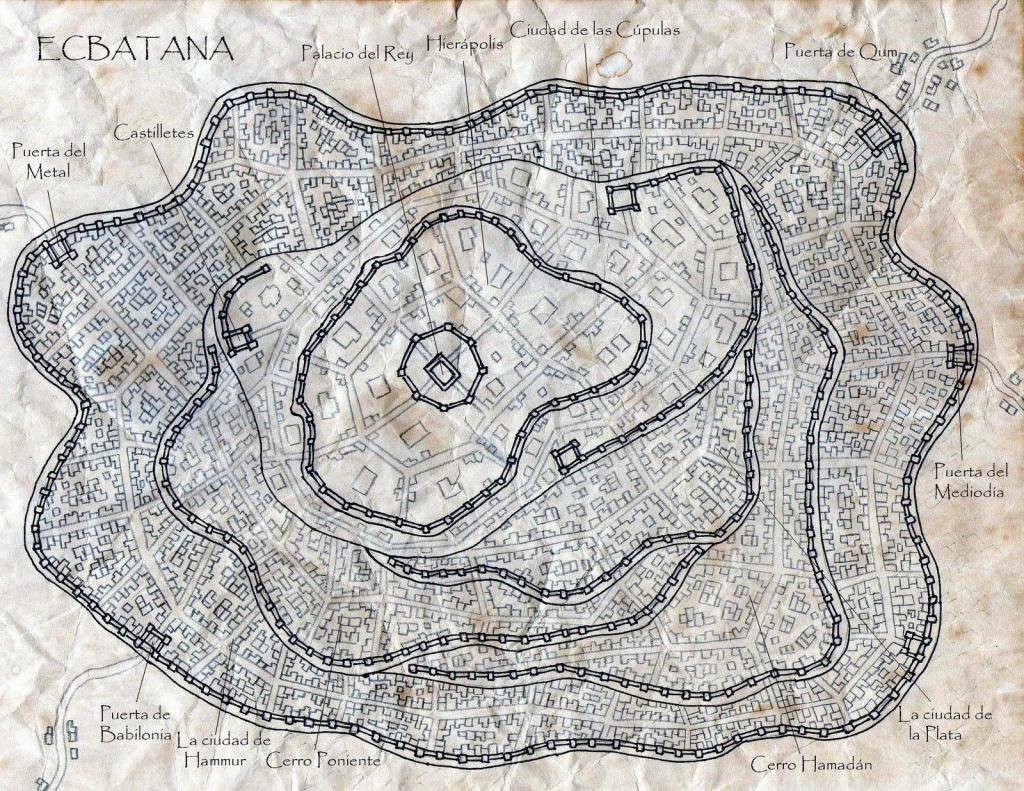
According to Herodotus, Ecbatana was founded by the Median king Deioces, who established it as a royal city surrounded by seven concentric walls, each painted in different colours.[2] While the literal accuracy of this description remains debated, it reflects a deeper truth: Ecbatana was conceived as a cosmological and political centre, a city designed to embody order and hierarchy.
When the Achaemenids inherited this city, they inherited more than infrastructure—they inherited legitimacy. By maintaining Ecbatana as a royal residence, early Achaemenid rulers signalled continuity with Median authority, reinforcing their claim over a diverse and newly unified empire.
Ecbatana in the Achaemenid Administrative System
Within the Achaemenid imperial structure, Ecbatana functioned as a northern administrative and political capital. While Susa served as an administrative hub and Persepolis as a ceremonial centre, Ecbatana offered something distinct
- A strategic position closer to Anatolia and the western satrapies
- A favourable summer climate for the royal court
- A logistical node connected to major imperial roads
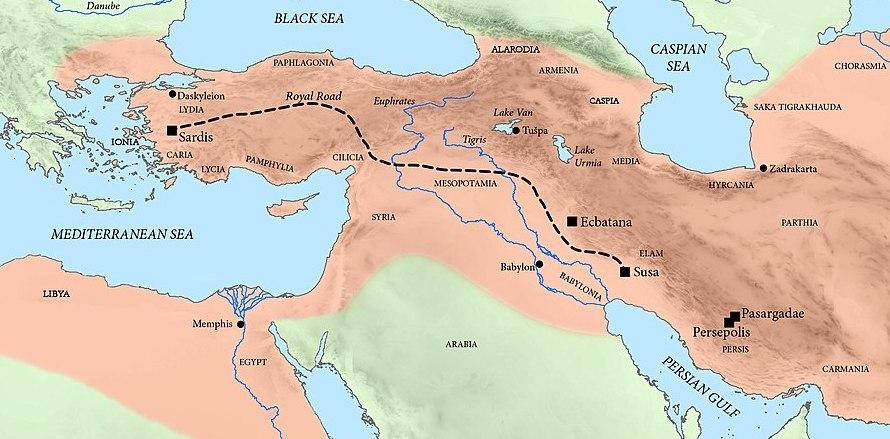
The city was linked to the wider empire through the Royal Road network, connecting it to Sardis, Susa, and Persepolis. These routes enabled rapid communication, troop movement, and economic exchange, integrating Ecbatana into the imperial system of governance.[3]
In this sense, Ecbatana was not peripheral—it was structurally central, forming part of a triad of capitals that allowed the empire to function across vast geographical distances.
Economic Life and Regional Networks
Ecbatana’s economic importance derived from both its location and its surrounding region. The fertile lands of Media supported agriculture, while its position along trade routes facilitated the movement of goods between east and west.
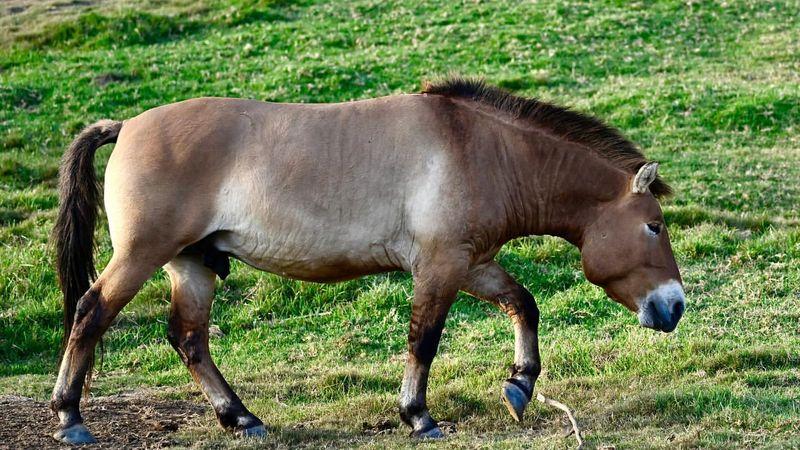
One of the most notable aspects of this regional economy was its association with the famed Nisean horse, bred in the plains of Media. These horses, renowned for their strength and beauty, were prized by Achaemenid kings and often depicted in imperial art. They were not merely animals of war or transport, but symbols of prestige and royal authority.
Ecbatana thus stood within a network that combined:
- agricultural production
- elite animal breeding
- long-distance trade
Together, these elements contributed to a regional economy that supported both local life and imperial demands.
Magi, Religion, and Intellectual Authority
Ecbatana also played a significant role in the religious and intellectual life of the empire, particularly through its association with the Magi. Originating among the Medes, the Magi were a priestly group who became influential within the Achaemenid court.
Their role extended beyond ritual practice. They were:
- interpreters of dreams and omens
- custodians of religious tradition
- participants in court politics
The relationship between the Magi and the development of Zoroastrianism remains complex and debated. However, it is clear that under rulers such as Darius I, religious ideas associated with Ahura Mazda gained prominence, and priestly figures likely played a role in shaping imperial ideology.[4]
Ecbatana, as a Median centre, would have been one of the environments in which these religious traditions persisted, adapted, and interacted with Achaemenid state power.
Ecbatana as a Royal Residence
Classical sources suggest that Ecbatana functioned as a seasonal capital, particularly during the summer months. Its cooler climate made it an ideal residence for the king and court, contrasting with the warmer lowland centres such as Susa.
This seasonal movement of the court was not incidental—it was a feature of imperial governance. By relocating between capitals, the king maintained visibility across regions and reinforced the presence of central authority throughout the empire.
Ecbatana, therefore, was not just a relic of Median power. It was an active component of Achaemenid rule, participating in the rhythms of governance, ceremony, and administration.
Conclusion: The Enduring Significance of Ecbatana
Ecbatana stands as a powerful example of how the Achaemenid Empire built its strength not through erasure, but through integration. By preserving and elevating a Median capital, the empire anchored itself in a deeper historical landscape, drawing legitimacy from the past while constructing a new imperial order.
Its roles—as a political centre, economic node, religious environment, and seasonal residence—reveal the layered complexity of Achaemenid governance. Far from being a secondary city, Ecbatana was a northern pillar of empire, connecting regions, traditions, and systems into a coherent whole.
Footnotes
[1] Briant, P. From Cyrus to Alexander: A History of the Persian Empire. Eisenbrauns, 2002.
[2] Herodotus, Histories, Book I.
[3] Kuhrt, A. The Persian Empire: A Corpus of Sources from the Achaemenid Period. Routledge, 2007.
[4] Boyce, M. Zoroastrians: Their Religious Beliefs and Practices. Routledge, 1979.


Leave a comment