
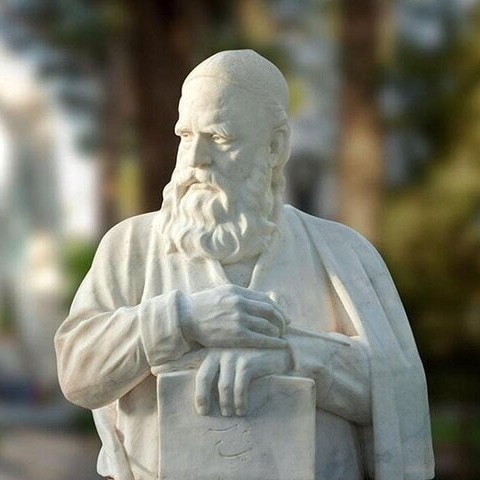
No. 174
Since what man harvests in this thorn-covered land
Is naught but grief to bear or life to withstand,
Happy the heart that left this world too soon—
At peace the one who never reached this strand. *
Philosophical Reflection
The thornfield is the poem’s controlling image, chosen against the background of Persian poetic tradition with deliberate precision. Where the garden is the classical figure for beauty, paradise, and flourishing, Khayyam names life a thornfield: not a garden from which one is expelled, but a field of thorns in which one was planted. The agricultural logic extends through the poem’s whole argument. A thornfield yields thorns. What one harvests from such soil is fixed by the nature of the ground: grief and death. The crop is predetermined.
Khayyam narrows existence to two outcomes with surgical economy: enduring grief, or the tearing of the body in death. These are not two possibilities among many; they are the only two things the thornfield produces. One endures grief, or one dies. There is no third option named. The compression is deliberate: the whole of living is walking on thorns; the whole of dying is tearing the body apart. The apparent choice between them is not a choice at all.
The final two lines perform a radical philosophical inversion. Khayyam does not celebrate the one who endured, or the one who found meaning, or the one who drank and laughed his way through the thorns. He names the one who departed early from this world happy-hearted. And then the poem pushes further still: the truly at rest, unburdened, at peace — is the one who never arrived at all. Non-existence as the summit of wellbeing. The poem ends on its most extreme position and holds it without retreat.
This is not mere despair, and it rewards reading against Khayyam’s philosophical treatises. In Ḍarūrat al-Taḍādd, he argues that evil and suffering are not essential to creation but accidental concomitants — the unavoidable shadow of contingent existence. The thornfield is not maliciously designed; it is what the structure of contingent being necessarily produces as its byproduct. What Khayyam says here in the rubāʿī is the personal conclusion of that philosophical position: if contingent existence necessarily yields grief and death as its harvest, then the contingent being who never entered the field is structurally exempt from that harvest. The logic is cold and precise — the grief not of someone who has lost faith, but of someone who has thought through the structure of existence to its furthest implication.
There is a peculiar honesty in this quatrain that resists sentimentality in both directions. Khayyam does not say life is worthless — he accounts for it with the same precision he brings to algebra: observe the yield, draw the comparative conclusion, state the limit case. The yield is grief and death. Those who harvested less are better off. Those who harvested none are at peace. The philosopher sets down his findings without flinching. He does not reach for consolation. The thornfield yields what it yields.
Footnote
* Source: Tarabkhaneh, Homaei, no. 174, translated by Kam Austine for Philosophy in Verse
چون حاصل آدمی درین خارستان
جز خوردن غصه نیست یا کندن جان
خرم دل آن کزین جهان زود برفت
آسوده کسی که خود نیامد به جهان
Related Treatises:
Necessity of Contradiction in the World, Determinism, and Immortality
Risāla dar ʿIlm Kulliyāt-e Wujūd (On the Universals of Being)
Risāla fī al-Kawn wa al-Taklīf (On the World and the Duty)
Internal Themes: #Nihilism #Existentialism #Thornfield #NonExistence #Mortality #ContingentExistence #Suffering
Published as part of the Philosophy in Verse series — under “Meaning & Doubt.”
Translated by Kam Austine

 Kam Austine
Leave a comment