
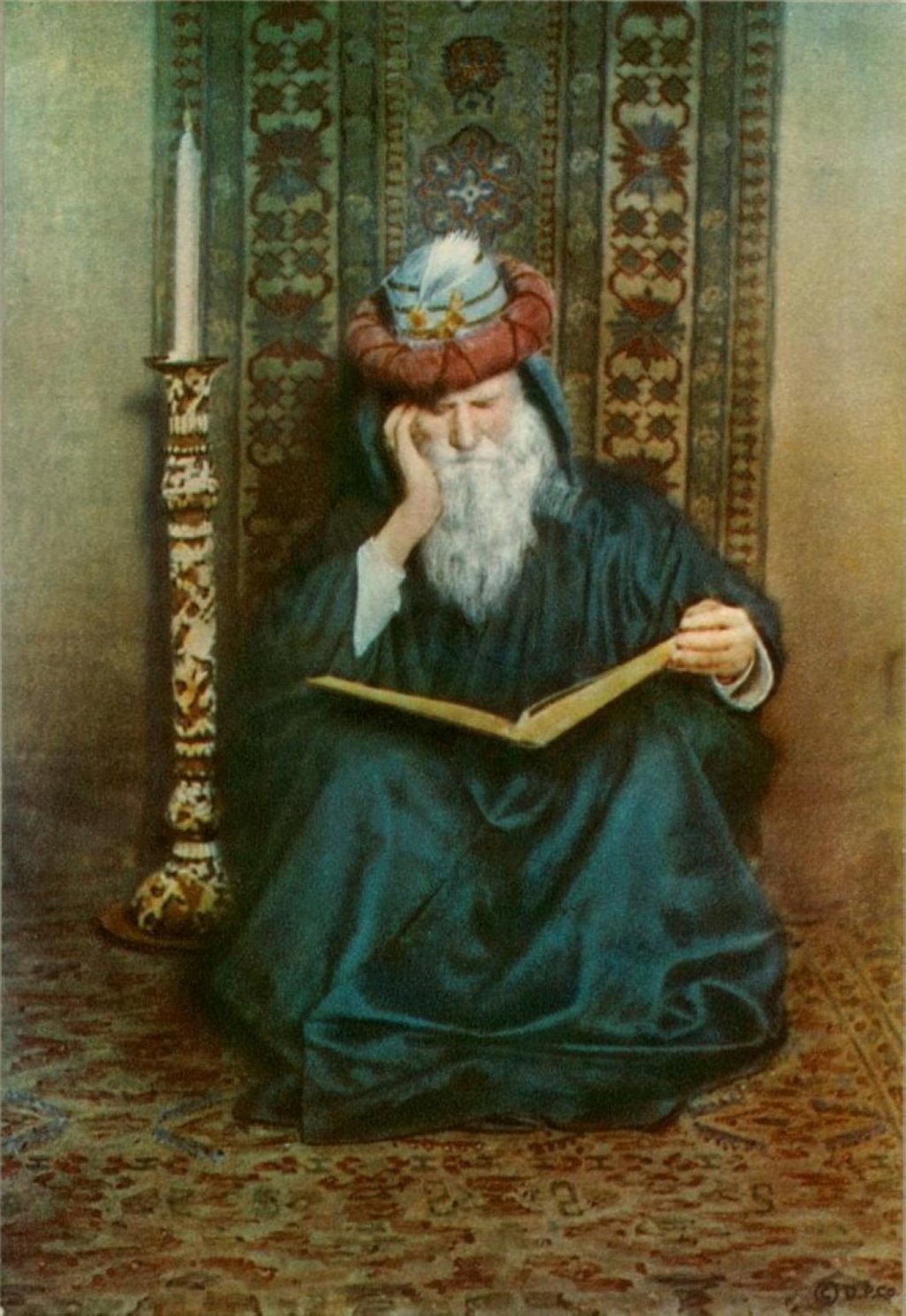
Khayyam’s Philosophy Series — KPS008
I. The Year He Measured
In 1079, a team of astronomers working under Omar Khayyam in Isfahan completed the most precise solar calendar the medieval world had ever produced. The Jalālī calendar — named for the Seljuk sultan Jalāl al-Dīn Malik-Shāh — calculated the tropical year at 365.24219858156 days. To appreciate what this means: the Julian calendar, which had governed the Western world since Caesar, drifts by one day every 128 years. The Jalālī calendar drifts by one day every 3,770 years. The Gregorian calendar, introduced to correct the Julian in 1582, drifts by one day every 3,030 years. Khayyam’s calendar, produced five centuries earlier, was more accurate than either.
This was not astrology. Khayyam was explicit in his contempt for the mystical claims made on the stars’ behalf. He was doing what we would now call empirical astronomy: systematic observation, mathematical modelling, honest reckoning with error. His year length was not a guess or a sacred number inherited from tradition. It was a measurement — and the discipline behind it tells us something important about how he saw the sky.
II. The Cage He Worked Within
The cosmology that framed Khayyam’s entire intellectual life was Ptolemaic and geocentric. Earth sat at the centre; around it moved, in order of increasing distance, the Moon, Mercury, Venus, the Sun, Mars, Jupiter, and Saturn, each carried on its own sphere. Beyond the outermost planet lay the fixed stars — the vault of heaven, perfect and unchanging. All motion was circular, because the circle was the perfect form, and the heavens admitted only perfection.
This was not merely a scientific model. It was a philosophical and theological commitment. Circular orbits meant divine order. To challenge the circle was to challenge the architecture of the cosmos as God had built it. Persian astronomers of the period — some of the finest mathematical minds in history — worked within this framework not because they were incurious but because the physics of the time offered no mechanism for anything else. Even Abu Rayhan Biruni (c. 973 – c. 1050), Khayyam’s slightly older contemporary and one of the most rigorous empiricists of the age, had considered the possibility that the Earth moved around the Sun and set it aside. The idea was thinkable. It simply could not be made to work with the tools then available.
Khayyam worked in this cage. His calendar reform did not require heliocentrism — one can track the Sun’s apparent motion with extraordinary precision while still assuming the Earth is standing still. The question is not whether he believed the Earth moved. Almost certainly he did not assert that it did. The question is whether, in the course of doing what he did with the precision he brought to it, he encountered something that did not quite fit.
III. The Crack in the Dome
Mathematical precision has a way of outrunning its theoretical foundations. When Khayyam’s calculations approached what we now recognise as elliptical approximations — fitting the observed motion of celestial bodies with models that strained beyond the classical circle — he was not inventing a new cosmology. But he was noticing that the old one required increasing ingenuity to maintain. Ptolemy’s system of deferents, epicycles, and equant points had accumulated over centuries precisely because circular orbits at uniform speeds kept failing to match what careful observers actually saw.
Khayyam saw the same sky with sharper instruments and greater precision. The discrepancies between theory and observation were harder for him to dismiss than they were for less careful astronomers. There is also the matter of conic sections. Khayyam’s algebra — the treatise that made him one of the greatest mathematicians of the medieval world — was built on the intersection of curves rather than straight lines. He knew, better than almost anyone alive, that conic sections describe the natural geometry of constrained motion through space. Whether he ever pointed that knowledge at an orbit and asked what shape it implied, we cannot say. But he possessed precisely the mathematical apparatus that Kepler would need, five centuries later, to replace the circle with the ellipse. He never made that connection explicitly. The tools were in his hands.
IV. What the Poet Saw
Here the scientist and the poet converge on the same perception through different instruments. Khayyam’s quatrains return again and again to the heavens — not as a source of order or revelation, but as a mirror of confusion. This is remarkable for a man whose professional life was spent trying to measure them.
One quatrain uses the constellation Taurus alongside the popular medieval belief that the earth rests on a cosmic cow’s head to make a pointed observation: above, a celestial cow; below, a mythological one; and between them, a multitude of people too credulous to notice the absurdity of the picture they have inherited. The mockery is sharp and specific. Khayyam is not attacking astronomy — he is attacking the unreflective acceptance of cosmological myth as fact. The man who measured the year to eleven decimal places had little patience for those who could not distinguish observation from legend.
In the sky, a cow named Taurus strides,
Quatrain no. 421
Beneath the earth, another cow abides.
Open your eyes and see the truth revealed,
Below and above the cows, fool people resides.
Another quatrain traverses the full extent of the Ptolemaic hierarchy — from earth’s dust to Saturn’s utmost height — and announces that the speaker has solved the riddles of the heavens’ turning. The tone is not triumph but exhaustion. Having moved intellectually through every sphere, having unravelled every celestial puzzle available to him, he arrives at the one boundary his precision cannot cross: death. The cosmos yields to measurement. Mortality does not.
From dust’s low realm to Saturn’s utmost height,
Quatrain no. 018
I solved the riddles of the heavens’ might;
I slipped all snares of cunning and deceit—
Save death’s own fetter, which no man brings to light.
A third is more unsettling still. The spheres (planets and the stars) that fill the sky, the quatrain says, set wise men wandering far from their mental home. Even those who chart the heavens roam. This is the philosopher of the calendar speaking in a register his astronomical treatises never used: the very act of studying the sky produces disorientation rather than clarity. You can measure the year to extraordinary precision and still not know what the turning means.
The spheres that dwell within this vaulted dome,
Quatrain no. 120
Set wise men wavering far from mental home.
Beware lest reason lose its guiding thread—
For those who chart their course wander as they roam.
And then there is the moon itself. One quatrain watches it cycle from dark to new and back to dark again, noting simply that it will continue doing so long after the speaker is gone. The poem is often read as a meditation on mortality. But read alongside the rest of Khayyam’s astronomical imagination, it is also an image of a cosmic mechanism that simply runs — indifferent to whether we understand it, indifferent to whether we are here to observe it at all. The precise measurement of that cycle does not change the cycle’s fundamental indifference to the measurer.
Whether in Baghdad or in Balkh, life draws to its end,
Quatrain no. 074
When the cup is filled, sweet or bitter — naught to mend;
Drink wine — for after you and me, the moon shall fare
From dark to new, from new to dark — eternal in its trend.
V. The Answer We Cannot Give
Did Khayyam suspect heliocentrism? The honest answer is that we do not know, and the question may be slightly wrong. Heliocentrism as Copernicus formulated it five centuries later was a fully articulated cosmological proposal, with a mechanism, a mathematical argument, and a willingness to pay the philosophical cost. What we can say about Khayyam is something at once more modest and more interesting: his precision made the existing model uncomfortable; his philosophy of the heavens treated them not as divine guarantors of order but as a source of bewilderment; and his poetry consistently depicted the celestial machinery as something that spins without knowing why it spins.
That last point matters more than it might appear. In the same intellectual tradition, other astronomers accepted the Ptolemaic model not just as a technical framework but as a philosophical commitment — the heavens were perfect, circular, divinely ordered, and their study was a form of worship. Khayyam wrote about the moon cycling endlessly without registering any individual human life. He wrote about the wise being made to wander by the very spheres they study. He mocked those who mistook inherited cosmological pictures for observed truth.
A man who saw the heavens as indifferent — who mocked the mythologies built around them, who pushed their measurement further than anyone before him, and who noticed in his poetry that even the charterers of the sky get lost — was perhaps not a closet Copernican. But he was someone who had quietly ceased to need the heavens to mean anything beyond what they actually did. And that, in its own way, was a more radical departure than the question of which body orbited which.
The dome holds, but it does not explain itself. Khayyam measured it more carefully than anyone and still arrived at the same place the heavens always deliver their most honest observers: not answers, but a more precise understanding of the question.
Published as Part of the Khayyam’s Philosophy Series — The Omar Khayyam Project


Leave a Reply