
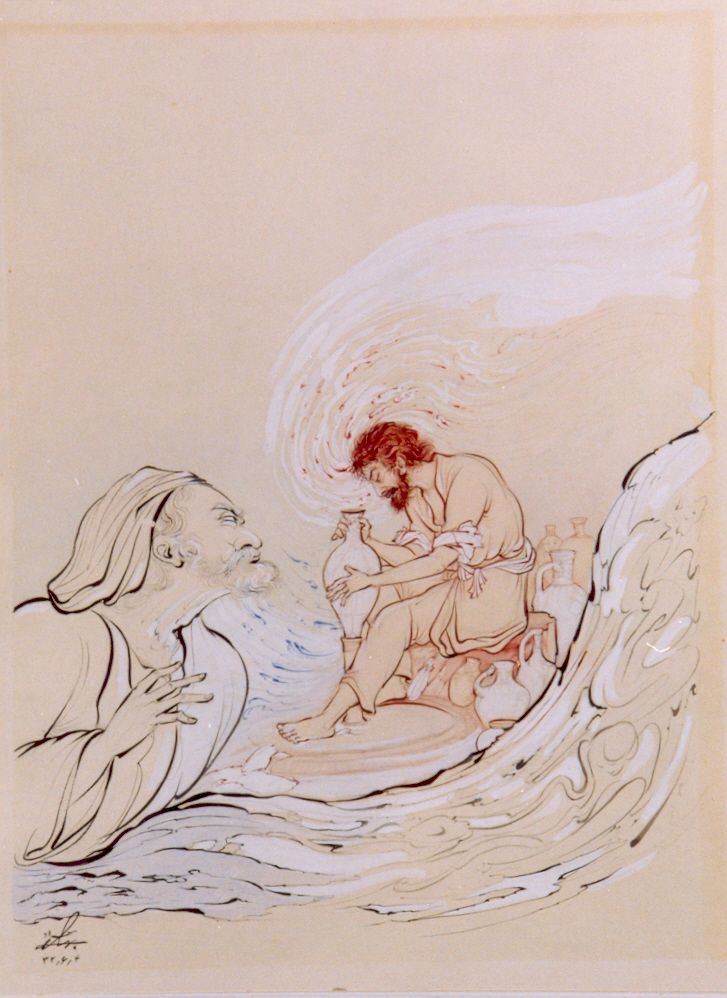
No. 240
If in this world thou hast some reach or sway,
*
without wine and cupbearer let no breath slip away;
before both me and thee, full many made assay—
the world gives never a thought to anyone’s dismay.
Philosophical Reflection
The counsel in this quatrain is absolute — not contingent on temperament, circumstance, or belief. While you have any reach in this world, let not a single breath pass without wine and cupbearer. But what makes it more than mere instruction is the ground it stands on: many people before us tested the same world and found the same thing. The world does not register human suffering. It gives no thought to anyone’s dismay. This is not a personal grievance or a dark mood — it is the consistently reproduced finding of every human life that ever ran its course and reported back. Khayyam is not offering a fresh philosophical position. He is confirming a result that was already in before either of us arrived.
The conditional opening — “if in this world thou hast some reach or sway” — sounds like a qualification but functions as the whole of the situation. As long as you have any capacity to act, any access to the world, any thread of life left to pull, the imperative holds without exception. What follows is the smallest possible unit of time: not a year, not a season, not a day — a breath. Let not a single breath slip away without wine and cupbearer. The compression is deliberate. A breath is the most basic biological measure of being alive, and it is exactly the measure Khayyam applies. Every breath is a complete opportunity; every breath that passes without full presence is already gone. The urgency is not theatrical — it is calibrated to the actual scale at which living occurs.
The third line carries the weight of accumulation. “Before both me and thee, full many made assay” — the word assay suggests trial, experiment, honest testing. These predecessors were not passive sufferers but active testers who brought their lives into contact with the world and waited for a response. They found none. The world did not acknowledge their pain, did not adjust its indifference on their behalf, did not register their names in any ledger of those who were owed something. And the conclusion drawn from this is not that they failed or that they were unlucky. The conclusion is that the world simply does not run on that logic. Human dismay is not an input the world processes. The experiment has been repeated enough times to be settled.
The final line arrives with the flatness of a fact: the world gives never a thought to anyone’s dismay. Not rarely, not in unusual cases — never. This is not bitterness at an exception. It is the description of a rule. And the response Khayyam builds on it is not despair but reorientation. If the world will not tend to your suffering, you must tend to your own living. The wine is not a retreat from a world that doesn’t care — it is the deliberate act of inhabiting a breath that could otherwise slip past unclaimed. The predecessors made their assay and the result is in; what remains is the choice of how to use the information. Every breath passed with full presence in it has been lived. Every breath passed waiting for the world to notice has been surrendered to the same heedless machinery that has never once looked back.
Footnote
* Source: Tarabkhaneh, Homaei, no. 240, translated by Kam Austine for Philosophy in Verse.
گر هست ترا در این جهان دسترسی
هان تا نزنی بی می و ساقی نفسی
پیش از من و تو بیازمودند بسی
دنیا نکند که رای آزار کسی
Related Khayyam’s Treatises: Treatise on the General Properties of Existence • Necessity of Contradiction in the World, Determinism, and Immortality • A Response to Three Questions in Philosophy and Theology
Internal Themes: #LiveInThePresent #CosmicIndifference #Existentialism #Mortality #Impermanence
Published as part of the Philosophy in Verse series


Leave a Reply