
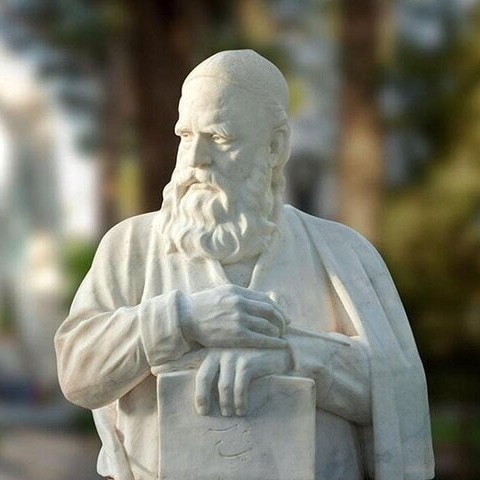
I. Framing the Question
There is a particular kind of intellectual courage in stating plainly that nothing lasts, nothing is known with certainty, and that the universe has no stake in human outcomes — and then continuing to live, to write, and to prescribe equanimity. Omar Khayyam exercised that courage across a corpus now counted at ninety quatrains that touch on what we would call nihilism — a word coined eight centuries after his death and typically applied to thinkers who lived in a world of collapsed religious certainty. Khayyam lived in no such world. Medieval Persian and Islamic civilisation in the eleventh and twelfth centuries was one of the most intellectually confident cultures in human history. Against that background, his systematic dismantling of meaning, certainty, and permanence is the more striking.
The term nihilism is anachronistic when applied to Khayyam, but the philosophical territory it names is precise. His quatrains explore at least three distinct registers of nihilism: an epistemological variety that challenges the knowability of ultimate truths — the afterlife, divine judgment, the grounds of moral authority; a moral variety, lighter in touch, that undermines inherited frameworks of virtue and prohibition without promoting their opposites; and an existential variety that confronts the universe’s indifference to human existence without flinching and without constructing consolations to soften what observation reveals. These three are not separate arguments. They are the same argument observed from different angles.
They went, and we go, and others come and go.
Quatrain no. 43
This closing line of a quatrain about old and young alike chasing their desires for a brief while is perhaps the quietest nihilist statement in the entire corpus. No emotion, no consolation, no philosophy announced. Just the plain rhythm of succession: departure, departure, departure. It is the entry point into a position that, when followed to its full depth, is as thoroughgoing as anything the European tradition would produce seven centuries later.
II. Greek Antecedents: Gorgias, Hegesias, and the Silenus Myth
The tradition Khayyam enters — without, in all likelihood, having read the texts — is ancient. The Greek philosopher Gorgias of Leontini (ca. 480–375 BCE) constructed the first explicit nihilist argument in three movements: nothing exists; if anything exists it cannot be known; if it can be known it cannot be communicated. This triple negation — ontological, epistemological, linguistic — maps remarkably well onto the three registers of Khayyam’s nihilism, though Gorgias deployed his as a rhetorical exercise while Khayyam deployed his as a life position.
Closer in spirit is Hegesias of Cyrene (ca. 290 BCE), known in antiquity as “the persuader to death.” Hegesias argued that life’s sufferings so far outweigh its pleasures that non-existence is rationally preferable. He was reportedly banned from lecturing in Alexandria after too many of his students chose death on his recommendation. The Silenus myth — preserved by Aristotle and famously retold by Nietzsche — delivers the same conclusion in mythological form: Silenus, asked by King Midas what is best and most desirable for humans, replies that it is best not to have been born; second best, to die as soon as possible.
Khayyam knows this territory precisely:
Since all the harvest man can reap from one life’s door to another
Quatrain no. 91
Is grief alone, and dying — nothing other;
Joyful is he whose presence never came to be,
At ease is he who never came from any mother.
And again:
If those unborn but knew what we endure —
Quatrain no. 39
From the world they never set feet to be.
These are the most extreme positions in Khayyam’s nihilist range, and the Greek parallel is exact. But the critical difference lies in what follows. For Hegesias, the conclusion is death. For Khayyam, these quatrains are part of a larger argument that ends somewhere else entirely — a point we will return to.
III. Materialist Nihilism: The Kiln as Physical Argument
What distinguishes Khayyam’s nihilism most sharply from both its Greek antecedents and its later Western descendants is its physical grounding. This is not the nihilism of collapsed values or abstract meaninglessness. It is a materialist observation: the kiln of creation takes back everything it made, without distinction, without sentiment, without record.
The dust beneath each living creature’s tread,
Quatrain no. 84
is a fair idol’s lock, a loved cheek, dead;
each brick upon a palace-arch’s spread,
is a vizier’s finger, or a sultan’s head.
This is nihilism as physics. The dust you walk on was once a beautiful face. The brick in the arch above you was once a king’s head. The material has not disappeared — it has merely been reassigned, without any ceremony marking the transition from sovereign to rubble, from beloved to earth. The universe’s indifference here is not philosophical abstraction; it is observable in the material you step on and build with. Greatness leaves no privileged remainder in the clay.
The same observation extends to the question of cosmic witness:
For a long time we shall not be — yet the universe will be,
Quatrain no. 168
No name of ours, no trace of us in this verse will be.
Before we came, nothing in it was missing;
When we are gone, the same traverse will be.
The universe’s indifference is stated twice — before and after — to make the point symmetrically complete. There was no vacancy before us. There will be no vacancy after. The cosmos did not wait for us and will not miss us. This is materialist nihilism at its most precise: not a feeling of meaninglessness, but a structural description of what existence looks like from the point of view of the matter involved.
IV. Ontological Nihilism: Existence Between Two Voids
Khayyam’s most concentrated statement of nihilism operates at the level of ontology — the structure of existence itself:
O unaware of the world’s whole plan, you are nothing,
Quatrain no. 149
Your base is wind, and no more than that you began — you are nothing;
Between pre-eternity and void to come, your being stands —
Around you naught, within this span — you are nothing.
The hammering refrain — “you are nothing” — repeated three times is not rhetorical emphasis. It is philosophical scaffolding: three distinct arguments converging on the same conclusion. Your foundation is insubstantial. Your existence is bounded by two absolute non-existences. Your interior contains nothing that exceeds those bounds. The argument is complete and geometric: beginning, boundary, and content are all negated in sequence.
Khayyam was a mathematician — the chief architect of a calendar reform so precise it would remain unsurpassed for centuries. The exactness of “between two non-existences” is not poetic licence; it is an ontological claim stated with the clarity of a man accustomed to defining the limits of solvable problems. His algebra treatise is celebrated for its honest acknowledgment of what his methods could not solve. The same intellectual discipline is at work here: the limits of human existence are named exactly, without softening.
A companion quatrain makes the same argument from the side of embodiment:
O unaware one — this embodied frame is nothing,
Quatrain no. 123
This circling tented dome the same — is nothing.
Be glad — within the seat of change and decay,
We cling but for a breath — that passing claim is nothing.
Both self and cosmos are emptied in sequence: the embodied frame is nothing, and the cosmic vault above is equally nothing. What remains? A breath. And that breath is also nothing. The argument is total — and then, startlingly, the directive appears: be glad. This is the first clear signal of the paradox that defines Khayyam’s response to his own nihilism.
V. Epistemological Nihilism: The Unanswerable Question
The third register of Khayyam’s nihilism targets knowledge specifically — and within knowledge, the claims that most directly govern human behaviour: the reality of divine judgment, the existence of heaven and hell, and the reliability of inherited philosophical and theological authority.
Who said Khayyam shall dwell in hell? —
Quatrain no. 211
who went to hell, who came from Paradise?
The argument is epistemological in the strictest sense. The challenge is not “hell does not exist” — that would be a metaphysical claim requiring its own grounds. The challenge is “no one has gone and returned to confirm the claim.” In the absence of a witness, the claim floats unverified. And since the entire moral machinery of prohibition and permission is built on that claim — do not drink, for you will be judged — the machinery loses its grip when the claim loses its witness.
Those who have gone before us lie in the dust of pride — O cupbearer,
Quatrain no. 263
In earth they sleep, in that same dust abide — O cupbearer.
Go, drink the wine, and hear the truth from me:
All that they said is but the wind’s own tide — O cupbearer.
“All that they said is but the wind.” Every tradition of thought, every philosophical school, every theological pronouncement — dissolved into wind by the simple observation that those who made the claims now lie in the same dust as anyone else, as silent and as fixed as the claims they made. The epistemological nihilism here is not targeted; it is total. The authority of all inherited assertion collapses under the same material pressure.
This is structurally parallel to Pyrrhon’s epochē — the suspension of judgment in the face of equally weighted opposing arguments — though Khayyam arrives at it through poetic observation rather than the formal machinery of ancient scepticism. The practical conclusion is the same: hold your claims lightly, because the ground beneath them is the same dust as everything else.
VI. Contemporary Western Nihilism: Schopenhauer, Nietzsche, and Camus
The European tradition most commonly associated with nihilism arrived in its mature form in the nineteenth century — eight centuries after Khayyam. The comparison is instructive precisely because the differences are as revealing as the parallels.
Arthur Schopenhauer argued that the will to live is itself the source of suffering, and that the non-satisfaction of desire is the human condition’s defining structure. His prescription was aesthetic contemplation and ascetic withdrawal — a position Khayyam would have recognised structurally and rejected personally. Khayyam shares Schopenhauer’s diagnosis entirely: existence is suffering, the world offers no reliable consolation, desire leads to grief. But Khayyam does not prescribe asceticism. He prescribes wine.
Friedrich Nietzsche diagnosed nihilism as the historical consequence of the death of God — the collapse of the value-structure that Western civilisation had built on theological foundations. His response was the revaluation of all values, culminating in the figure of the Übermensch. For Nietzsche, nihilism was a crisis to be overcome through an act of creative will. For Khayyam, the groundlessness of existence is not a crisis but a condition — one that has been present from the beginning and does not require a historical event to make it visible.
The world’s state, mortal life, and existence —
Quatrain no. 142
Are a dream, a phantom, a fraud, a passing breath’s brief trace.
This four-term litany — dream, phantom, fraud, breath — maps closely onto Schopenhauer’s world-as-representation: what we take to be solid reality is surface, appearance, construction. But where Schopenhauer turns to the concert hall, and Nietzsche turns to the mountain to forge new values, Khayyam stays in the garden with the wine jar and declines both programmes.
Albert Camus comes closest. The Absurd, as Camus defined it, is the gap between the human desire for meaning and the universe’s persistent silence. His response — revolt, freedom, passion — refuses both suicide and philosophical leap. Khayyam’s response to the same gap is structurally analogous: neither denial nor despair. But its emotional register is different. Camus revolts; Khayyam becomes indifferent. The distinction, as the next section will show, is not a smaller ambition but a more quietly radical one.
VII. The Contentment–Nihilism Paradox: Khayyam’s Distinctive Answer
The most revealing pattern in Khayyam’s full corpus is the frequency with which nihilism appears as secondary to contentment — not as its contradiction, but as its philosophical foundation. Among the quatrains examined to date, twelve carry this pairing. The contentment Khayyam prescribes is not naive. It is earned after honest confrontation with groundlessness, and it cannot be understood without that groundlessness as its premise.
O Lord, for me a door of sustenance implore,
Quatrain no. 6
And send it not through mortal favour’s store;
Keep me so deeply drunk on wine’s repose,
That in unknowing, pain can trouble me no more.
This is a prayer — addressed to God, requesting wine. The theological paradox is surface-level; the philosophical depth lies in the third and fourth lines. The wine is sought not for pleasure but for unknowing. The pain the speaker wishes to escape is not physical — it is the pain of clarity, of full awareness of the void. He wants to be drunk enough that what has been honestly seen no longer causes suffering. This is not hedonism. It is nihilism requesting an anaesthetic.
The paradox is this: the most thoroughgoing acceptance of the nihilist position is also the most pragmatic. Once the void is honestly named — existence is nothing, knowledge is nothing, claims are wind, dust is all — there is nothing left to do but find a posture that can sustain life within those conditions. Khayyam’s prescription is wine-induced equanimity: not the forgetting of the void, but the achieved indifference to it. The wine is the instrument for becoming, from the inside, what the cosmos already is by nature. As Khayyam argues in a quatrain examined earlier: the correct response to universal indifference is not anguish at being ignored — it is to become, in some measure, indifferent yourself.
This distinguishes Khayyam from every major nihilist in the Western tradition. Schopenhauer prescribes withdrawal from desire. Nietzsche prescribes self-overcoming. Camus prescribes revolt. Khayyam prescribes equanimity — a position with structural parallels in Buddhist thought (honest diagnosis of suffering, followed by a path that refuses both denial and despair), though arrived at independently and expressed through wine rather than meditation. The wine is not the point; the equanimity is. The wine is the method appropriate to the moment and the man.
VIII. Nihilism as the Ground of Sacred Critique
One further function of nihilism in Khayyam’s corpus deserves attention. It appears as secondary to sacred critique in eight documented cases — and in each, it does specific philosophical work. The nihilist position is not added after the mockery; it is the precondition that makes the critique philosophically grounded rather than merely irreverent.
If heaven makes no war on us, no strife is found — it is a wonder,
Quatrain no. 264
If stones rain not upon our heads from all around — it is a wonder.
The judge who buys his wine and sells off sacred trust —
If in the school he plays not false before the crowd — it is a wonder.
The quatrain exposes religious authority as arbitrary and corrupt. But what gives the exposure its force is not the observation of hypocrisy alone. It is the prior nihilist claim that cosmic and moral order are themselves groundless. If the universe operates without reliable principle — if existence is bounded by nothingness, knowledge by silence, and the earth by the indifferent cycling of material — then institutions that claim to speak on behalf of cosmic order have no special standing. The judge’s corruption is not a deviation from a reliable norm; it is a local instance of the norm’s own arbitrariness.
This is a more radical move than anticlericalism. Anticlericalism argues that religious institutions have failed to live up to their own standards. Khayyam’s nihilist critique argues that the standards themselves rest on foundations that the void has already dissolved. The sacred is not failing its own promise; it never had the ground its promise required.
IX. Khayyam in Perspective
To say that Omar Khayyam was a nihilist before nihilism had a name is not to claim him for a European tradition he predates and never read. It is to observe that the philosophical position now called nihilism — the systematic interrogation of meaning, certainty, moral authority, and permanent existence — was not invented by Schopenhauer or Nietzsche or Camus. It was worked out, in compressed four-line forms, by a mathematician-poet in eleventh-century Persia, under conditions that gave him no social warrant for the position and no precedent in his own tradition for its conclusions.
Among Khayyam’s quatrains analysed for this article almost thirty percent of them carry some trace of nihilism, whether as spine or as secondary lens. The dominant pairing, in which nihilism appears alongside existentialism, confirms that Khayyam’s nihilism is diagnostic rather than terminal: it identifies the void, and the existentialist response then decides how to inhabit it. The second most common pairing — alongside contentment — is the key to the whole: what looks like hedonism is in fact a hard-won equanimity, available only to those who have looked at the void long enough to stop being afraid of it.
What Khayyam offers is not a programme of overcoming, not a revolt, not a meditation practice. It is something quieter and perhaps more difficult: the honest naming of what is, followed by the decision to drink anyway — not as escape, but as the one concrete act that occupies the interval without pretending it is something it is not. The wine does not make the void smaller. It makes the person holding the cup equal to it.
Part of the Khayyam’s Philosophy Series — The Omar Khayyam Project


Leave a Reply