
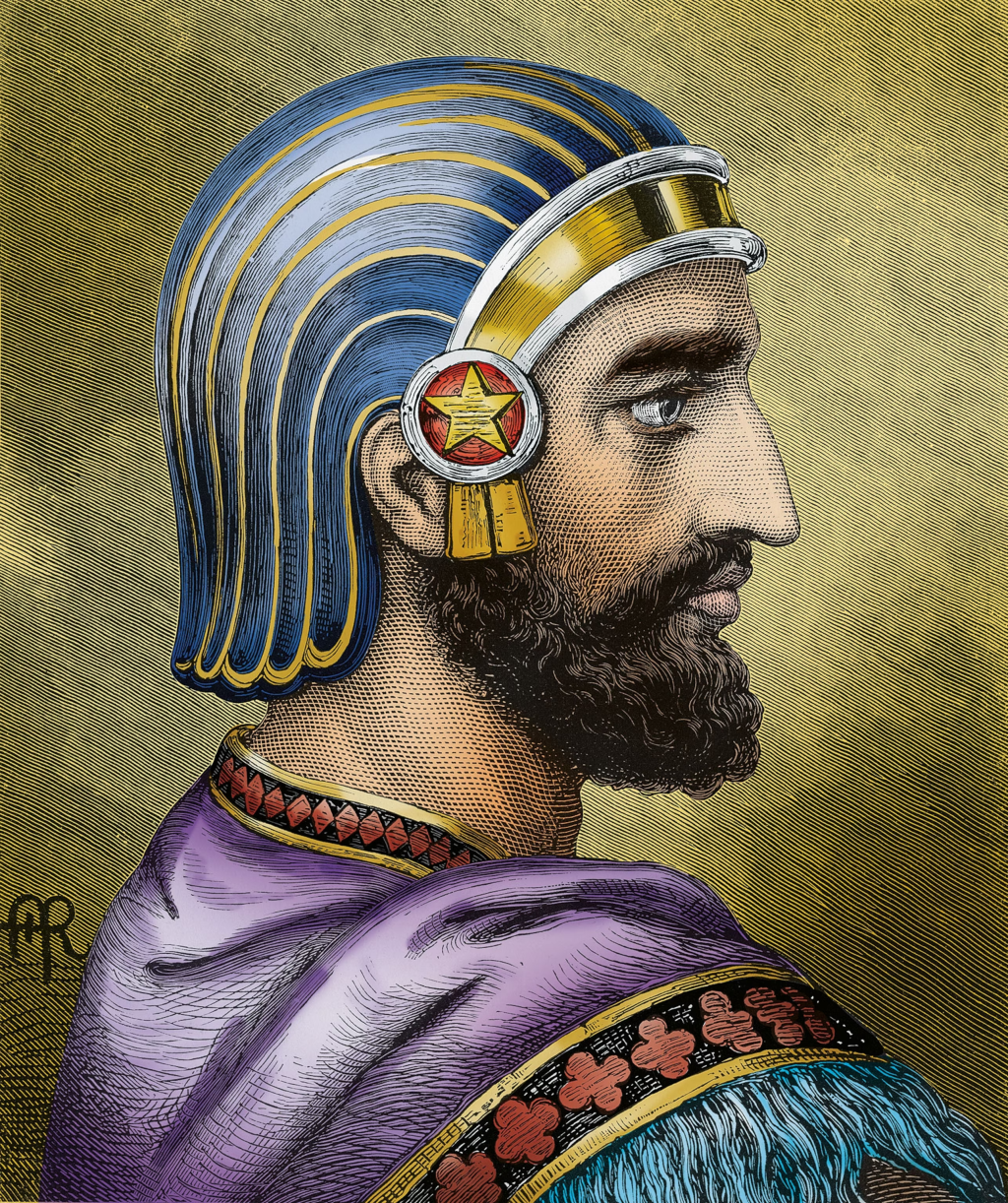
Introduction: Four Victories That Changed the Ancient World
In the middle of the sixth century BCE, Persia was not yet an empire. It was a relatively small kingdom situated in the region of Pars, overshadowed by larger and more established powers. Within a few decades, however, the political map of the ancient Near East would be transformed. Under the leadership of Cyrus the Great, Persia expanded from a regional kingdom into the largest empire the world had yet seen.[1]
This transformation was not achieved through a single decisive battle. Rather, it resulted from a series of campaigns that dismantled existing centres of power and incorporated their resources, institutions, and traditions into a new imperial framework. Four conquests proved particularly decisive: the defeat of the Medes, the fall of Lydia, the capture of Babylon, and the consolidation of Persia’s eastern frontiers. Together, these victories reshaped the ancient world and laid the foundations for two centuries of Achaemenid rule.
The story of these conquests is not simply one of military success. It is the story of how Persia inherited, adapted, and integrated the political traditions of the civilisations it conquered.
The Persian Kingdom Before Expansion
Before Cyrus emerged as a major political figure, the Persians occupied a relatively modest position within the Iranian world. Their homeland in Pars was centred around Anshan and the surrounding highlands of southwestern Iran. The region had inherited elements of Elamite culture while maintaining its own Persian identity.[2]
To the north stood the Median kingdom, which dominated much of the Iranian plateau. To the west lay Lydia, enriched by trade and renowned for its wealth. Further west and south stood Babylon, one of the most prestigious cities in the ancient world. Egypt remained independent and powerful.
Persia’s future as an imperial power was far from obvious. Yet this position on the margins of several great civilisations proved advantageous. The Persians were exposed to multiple administrative traditions, military practices, and political models. When expansion came, they would draw upon all of them.
The Conquest of Media: The Birth of Persia
The first and most important conquest was the defeat of the Medes around 550 BCE.[3]
From a military perspective, the victory was significant. From a historical perspective, it was transformative.
The Median kingdom had long been one of the dominant powers of the Iranian plateau. Under Astyages, however, internal dissatisfaction weakened royal authority. According to Greek traditions, elements of the Median elite, including the influential Harpagus, supported Cyrus against their own king.[4]
Whether every detail of these accounts is accurate remains uncertain, but the outcome is clear. Cyrus defeated Astyages and brought Media under Persian control.
What makes this conquest remarkable is what followed. Unlike the Assyrians, who often ruled through fear and mass deportation, Cyrus chose integration. Median nobles continued to serve within the new political order. Median traditions remained influential at court. Ecbatana continued to function as an important royal centre.
In many respects, the Persian Empire began not through the destruction of Media but through its absorption.
This victory provided Cyrus with three crucial advantages:
- Legitimacy among Iranian peoples.
- Access to Median administrative structures.
- Control over the central Iranian plateau.
Without Media, there would have been no Persian Empire.
The Conquest of Lydia: Wealth and the Western Gateway
If Media gave Cyrus legitimacy, Lydia gave him wealth.[5]
Located in western Anatolia, Lydia occupied a strategic position between Asia and the Greek world. Its king, Croesus, became legendary for his riches, a reputation that survives in the modern expression “rich as Croesus.”
The conflict between Cyrus and Croesus was more than a struggle between two kings. It was a contest for control of one of the most prosperous regions of the ancient world.
After defeating Croesus, Cyrus captured Sardis, the Lydian capital. The consequences extended far beyond territorial expansion. Persia inherited:
- access to major trade routes;
- control of western Anatolia;
- substantial financial resources;
- influence over Greek cities of the Aegean coast.
The incorporation of Lydia also exposed Persia to new cultural influences. Greek merchants, craftsmen, and intellectual traditions increasingly interacted with the Persian world.
Centuries later, the famous Royal Road would connect Sardis to Susa, symbolically linking the western and eastern ends of the empire.[6]
The conquest of Lydia transformed Persia from an Iranian kingdom into a transcontinental power.
The Conquest of Babylon: Legitimacy and Prestige
Among all of Cyrus’ victories, none carried greater symbolic significance than the conquest of Babylon in 539 BCE.[7]
Babylon was not merely another city. It was one of the oldest centres of civilisation in human history. For centuries it had served as a seat of kingship, religion, scholarship, and imperial authority.
Control of Babylon conferred prestige unlike any other conquest.
The circumstances of Cyrus’ entry into the city remain debated. Contemporary sources suggest that Babylon fell with relatively limited destruction. The Nabonidus Chronicle records Cyrus’ victory, while the Cyrus Cylinder presents him as a ruler chosen by Marduk to restore order after the failures of Nabonidus.[8]
Whether these claims represent political propaganda or genuine popular sentiment, they reveal an important aspect of Persian rule. Cyrus presented himself not as a foreign conqueror but as a legitimate successor.
This approach yielded enormous benefits.
Babylon provided:
- administrative expertise;
- economic resources;
- international prestige;
- access to long-established networks of communication.
The city also became central to Cyrus’ enduring reputation. His policies toward local religious communities, including the Jews exiled in Babylon, contributed significantly to the image of Cyrus as a liberator rather than a destroyer.[9]
Babylon gave Persia something no military victory alone could provide: legitimacy in the eyes of the ancient world.
The Eastern Campaigns: Securing the Frontier
While Media, Lydia, and Babylon often dominate historical narratives, Cyrus’ eastern campaigns were equally important for the long-term stability of the empire.[10]
Beyond the Iranian plateau lay regions characterised by vast distances, diverse populations, and mobile pastoral societies. These territories included areas associated with Bactria, Sogdia, and other frontier zones extending toward Central Asia.
Unlike the urban centres of Babylon or Sardis, these regions could not be controlled solely through occupation of major cities. Effective rule required:
- local alliances;
- military flexibility;
- control of strategic routes.
The eastern frontier became a laboratory for imperial administration. The challenges encountered here would later influence the development of satrapal governance, communication networks, and military logistics.
It was also on these frontiers that Cyrus met his death, according to many traditions. Whether he fell fighting the Massagetae or under different circumstances, the eastern campaigns demonstrate that Persia’s expansion was not complete with Babylon. The empire remained a dynamic and evolving project.
Why Cyrus Succeeded Where Others Failed
Military victories alone do not explain Cyrus’ success.
History contains many examples of conquerors who achieved spectacular victories only to see their empires fragment after their deaths. What distinguished Cyrus was his ability to convert conquest into stability.
Several factors contributed to this success.
First, he incorporated local elites rather than eliminating them. Median nobles, Babylonian administrators, and regional leaders often retained positions of influence under Persian rule.
Second, he respected established religious traditions. Rather than imposing a uniform ideology, he sought legitimacy through local institutions.
Third, he understood the value of continuity. Existing administrative systems were adapted and expanded rather than replaced wholesale.
Finally, he appears to have recognised that an empire could not be governed through fear alone. While military force remained essential, long-term stability depended upon cooperation and legitimacy.[11]
These principles would later be refined by Darius I, but their foundations were laid during the reign of Cyrus.
The Empire Cyrus Left Behind
When Cyrus died around 530 BCE, the empire he left behind stretched from Central Asia to Anatolia and from the Iranian plateau to Mesopotamia.[12]
It was already the largest political entity the world had seen. Yet its greatest significance lay not in its size but in its structure.
The empire combined:
- Median political traditions;
- Elamite administrative experience;
- Babylonian scholarship;
- Anatolian wealth;
- Persian leadership.
This synthesis created a political system capable of surviving its founder.
Cambyses II would expand it further into Egypt. Darius I would reorganise and strengthen it through administrative reforms, roads, taxation, and monumental architecture. Persepolis, Susa, the Royal Road, the satrap system, and many other achievements of the Achaemenid era were possible only because Cyrus first assembled the empire itself.
Conclusion: The Making of an Empire
The rise of Persia was not inevitable. It was the result of a sequence of victories that altered the course of history.
Media provided legitimacy. Lydia provided wealth. Babylon provided prestige. The eastern campaigns provided security.
Together, these conquests transformed a regional kingdom into an imperial power spanning continents.
Yet the true achievement of Cyrus was not territorial expansion alone. It was the creation of a framework capable of integrating diverse peoples into a common political order. His successors inherited more than conquered lands; they inherited a vision of empire.
For that reason, the story of Cyrus’ conquests is ultimately not a story about military victories. It is a story about the birth of Persia as an empire and the beginning of one of the most influential political experiments in human history.
Footnotes
[1] Pierre Briant, From Cyrus to Alexander: A History of the Persian Empire (2002).
[2] Matt Waters, Ancient Persia: A Concise History of the Achaemenid Empire (2014).
[3] Amélie Kuhrt, The Persian Empire: A Corpus of Sources from the Achaemenid Period (2007).
[4] Herodotus, Histories, Book I.
[5] Herodotus, Histories, Book I; Josef Wiesehöfer, Ancient Persia.
[6] Briant, From Cyrus to Alexander.
[7] Nabonidus Chronicle.
[8] Cyrus Cylinder, British Museum Collection.
[9] Ezra 1:1–4; Isaiah 44:28–45:1.
[10] Maria Brosius, The Persians.
[11] Briant, From Cyrus to Alexander; Waters, Ancient Persia.
[12] Kuhrt, The Persian Empire.



Leave a Reply