
Scribes, Tablets, and the Imperial Memory of the Achaemenid Empire
Introduction: The Empire That Remembered
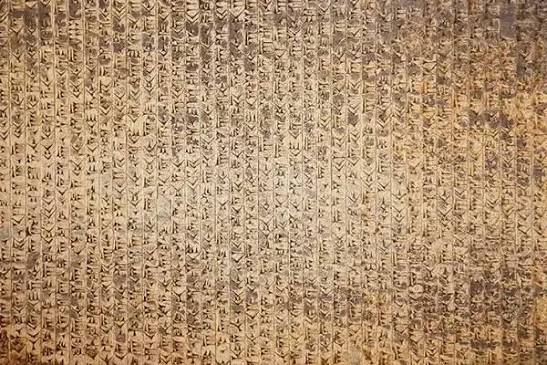
The Achaemenid Empire was not held together by armies alone. It was also held together by memory: names recorded, rations counted, letters sealed, laws copied, tribute listed, journeys authorised, workers identified, and royal victories carved into stone. Behind the visible splendour of Persepolis, the royal road system, and the ceremonial court stood a quieter world of scribes, tablets, papyri, leather documents, seals, storehouses, and archives.
This article asks a simple but important question: how did the Persians preserve knowledge across such a vast empire? The answer is not a single “library” in the modern sense. We should not imagine Achaemenid Persia as possessing one central imperial library like the later Library of Alexandria, nor even a direct equivalent of Ashurbanipal’s famous Assyrian library at Nineveh. Persian knowledge was preserved through many kinds of record: royal inscriptions, administrative tablets, private contracts, provincial letters, seal impressions, temple archives, business archives, and oral traditions of memory.
The Achaemenids inherited older scribal cultures from Elam, Assyria, Babylonia, Egypt, and Anatolia, and rather than erasing them they put them to work. Elamite remained central in the Persian heartland; Babylonian and Akkadian legal writing continued in Mesopotamia; Egyptian Demotic survived in Egypt; Imperial Aramaic became a flexible language of communication across provinces; and Old Persian was created for royal display, above all in inscriptions such as the Behistun Inscription.1 The empire’s memory was therefore never one voice but many, organised under royal authority — and that pragmatic multilingualism, as we shall see, was one of its great administrative strengths.
What Was an Archive in the Achaemenid World?
An archive in the Achaemenid Empire was not necessarily a quiet room of books. It could be a group of clay tablets stored in a palace fortification, a treasury office, a temple room, a business house, a satrapal bureau, or a family collection. It could preserve contracts, accounts, letters, ration lists, payments, court records, land leases, tax receipts, royal decrees, or sealed orders.
The most important distinction is between a library and an archive. A library preserves texts for reading, study, ritual, literature, or scholarship. An archive preserves records because they are useful: they prove payments, obligations, orders, property, authority, or identity. The Achaemenid world certainly knew literary and religious texts, but most surviving Persian-period material is archival rather than literary.
This matters because archives show the empire at work. Royal inscriptions tell us what kings wanted remembered; archives tell us what officials needed to know tomorrow morning. They record grain, wine, animals, silver, workers, roads, estates, temples, taxes, lawsuits, and letters. In these documents the empire becomes less heroic but more real.
Languages and Materials: Clay, Papyrus, Leather, Stone, and Seals
The materials of Achaemenid knowledge varied as much as its languages. Clay tablets were durable and well suited to Mesopotamian and Elamite scribal traditions. Papyrus was common in Egypt. Leather and parchment were useful for letters and portable documents. Stone preserved royal messages meant to last. Seals and seal impressions authenticated authority. A document was not only writing; it was writing plus material, seal, script, language, and context.2
Old Persian deserves special attention, because it is the exception that proves the rule. Unlike the scripts the Persians inherited, Old Persian cuneiform was a deliberate invention — a compact, semi-alphabetic system of a few dozen signs, almost certainly devised in the reign of Darius. In the Behistun Inscription itself Darius claims to have created a new form of writing “in Aryan” that had not existed before. Yet this royal script was used almost entirely for monuments and display. The empire did not run its administration on it: the day-to-day paperwork of the heartland was kept in Elamite, and cross-provincial correspondence in Aramaic. Old Persian preserved the king’s voice for eternity; other scripts preserved the empire’s business.3 (On the script itself, see Persian Cuneiform.)
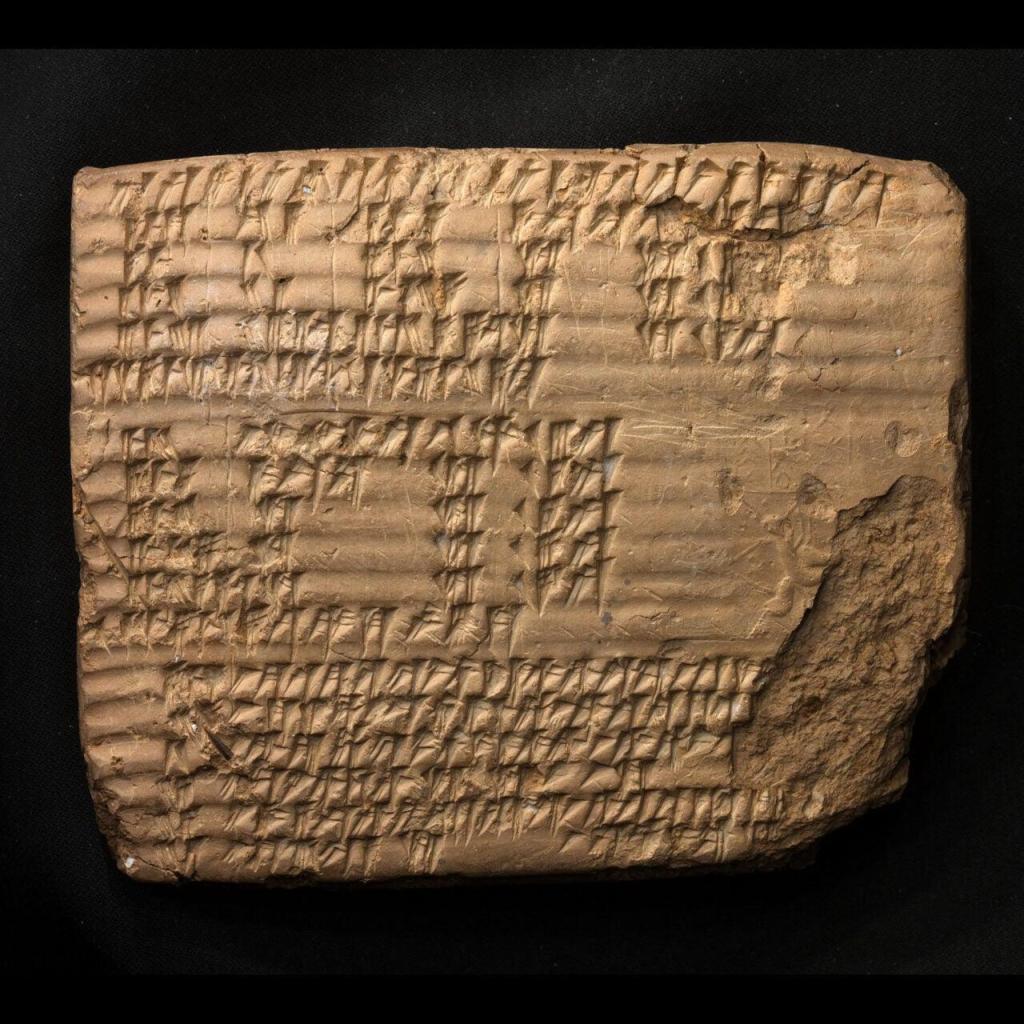
A clay tablet from Persepolis, a papyrus from Elephantine, a leather letter of Aršāma, a Babylonian contract from Nippur, and the trilingual Behistun Inscription all belonged to the same imperial world, but they did not serve the same purpose. The empire did not impose one script on everyone. It governed through a practical multilingualism, allowing Babylonian scribes to write Babylonian contracts, Egyptian scribes to write Egyptian documents, and Aramaic scribes to carry messages across provincial lines.
Royal Inscriptions: Memory Carved for Eternity
Royal inscriptions were not archives in the ordinary sense, but they were central to Achaemenid knowledge preservation. They fixed the king’s version of events in durable form. The Behistun Inscription of Darius I is the greatest example. Carved high on a cliff, written in Old Persian, Elamite, and Babylonian, and accompanied by a relief of Darius before defeated rebels, Behistun turned a disputed seizure of power into an official memory of truth defeating the Lie.
Behistun was not only a text but a political instrument, and Darius meant it to travel. In its closing sections he declares that he had the inscription copied and sent “to all the lands” — an early act of imperial publication, not merely a monument left on a cliff. Its power lay in the combination of image, language, geography, repetition, and distribution: it made royal legitimacy visible, readable, and portable.4
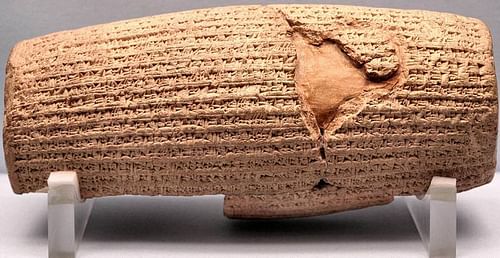
The Cyrus Cylinder performed a different kind of memory. Written in Babylonian cuneiform, it presented Cyrus as chosen by Marduk, restorer of cults, and legitimate king of Babylon. It did not abolish slavery or announce modern human rights, but it preserved the Babylonian form through which Cyrus explained his conquest. The Nabonidus Chronicle and other Babylonian Chronicles add yet another perspective — not Persian royal propaganda but Babylonian chronological memory of events such as the fall of Babylon and the entry of Cyrus. Together they show how royal memory could be contested, localised, and preserved in different forms.5
The Persepolis Administrative Archives
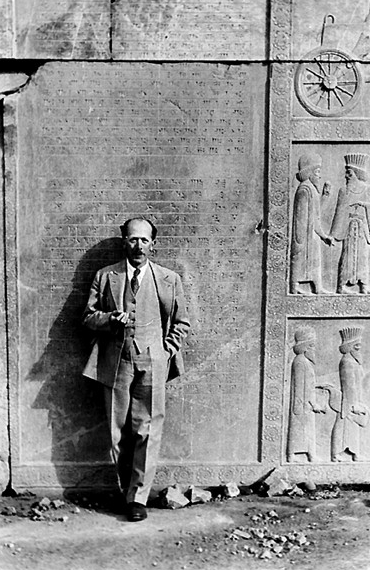
The greatest surviving administrative evidence from the Persian heartland is the Persepolis Administrative Archives, a name that refers mainly to two groups: the Persepolis Fortification Archive and the Persepolis Treasury Archive. These are not literary libraries. They are the working paperwork of empire.
The Fortification Archive, found in 1933 in rooms of the fortification wall at Persepolis, contains tens of thousands of tablets and fragments from the reign of Darius I. Many are written in Elamite; others are Aramaic, or uninscribed but sealed. They record the movement and distribution of food — grain, wine, beer, animals, fruit, flour — and mention workers, travellers, officials, royal women, animals, storehouses, routes, and administrative centres.6 Its importance is difficult to overstate. It brings into view people who rarely appear in royal inscriptions: labourers, women workers, mothers, children, travellers, accountants, ration officials, animal handlers, and regional administrators. In Behistun, Darius speaks as king; in the Fortification Archive, his empire feeds workers, issues travel rations, records storehouse transfers, and stamps clay with seals.
The Treasury Archive belongs to a slightly later phase and records payments from the royal treasury — especially silver and foodstuffs issued to workers and craftsmen at Persepolis. If the Fortification Archive shows an economy of in-kind movement, the Treasury Archive shows the growing importance of silver payments in the royal economy.7 Together, the two reveal an empire that counted — not only gold and tribute, but jars, animals, workers, mothers, wages, journeys, and days.
Scribes, Seals, and the Authority of Writing
The Achaemenid state depended on scribes. They wrote, copied, translated, registered, sealed, stored, and retrieved documents — some in palace administration, some in temples, some in satrapal offices, some for business families, and some for local communities. Their power came from trained memory.
A written order alone was not enough; it had to be authenticated. Seals made documents trustworthy. A seal impression could identify an official, office, household, or authorised person, and even uninscribed clay sealings preserve the trace of documents that no longer survive. In this sense a seal could outlive the letter it once protected. This is one reason Achaemenid archives are so useful for art history as well as administration: seal impressions show heroes, animals, worship scenes, royal imagery, and local motifs, revealing how visual identity entered bureaucracy. The empire’s paperwork was not plain. It carried images of power.
Imperial Aramaic and the Moving Document
If clay tablets show the administrative depth of the Persian heartland, Imperial Aramaic shows the mobility of the empire. Aramaic was flexible, widely understood among scribal communities, and suitable for letters on papyrus, parchment, and leather. It helped communication move across regions where local languages differed.
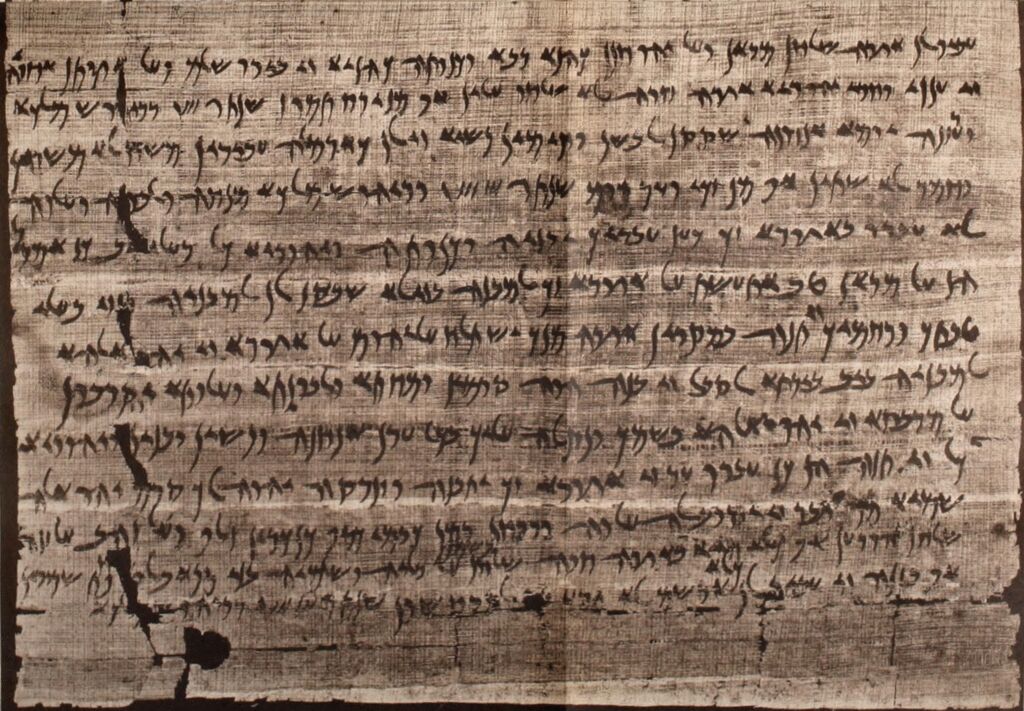
The Elephantine Papyri are among the richest examples. Found in Egypt, they preserve the Aramaic archive of a Jewish military colony at Elephantine, near the First Cataract of the Nile: letters, contracts, petitions, family records, temple matters, and legal disputes. They show Persian rule not from the royal centre but from a frontier community living under imperial authority. The Elephantine material even preserves an Aramaic version of the Behistun Inscription — proof that Darius’s royal message did not remain only on a cliff in western Iran but was copied, translated, and transmitted across the empire.8
The Aršāma letters open another window. Written in Aramaic on leather, they concern the estates and affairs of Aršāma, a Persian prince and satrap connected with Egypt, Susa, and Babylon. They show the world of high-level provincial administration — orders, estates, officials, travel, provisions, and command carried through written communication over great distances.9 Imperial Aramaic was not the language of royal glory in the way Old Persian was, but it was one of the languages of practical power.
Babylonian Archives: Business, Temples, and Private Memory
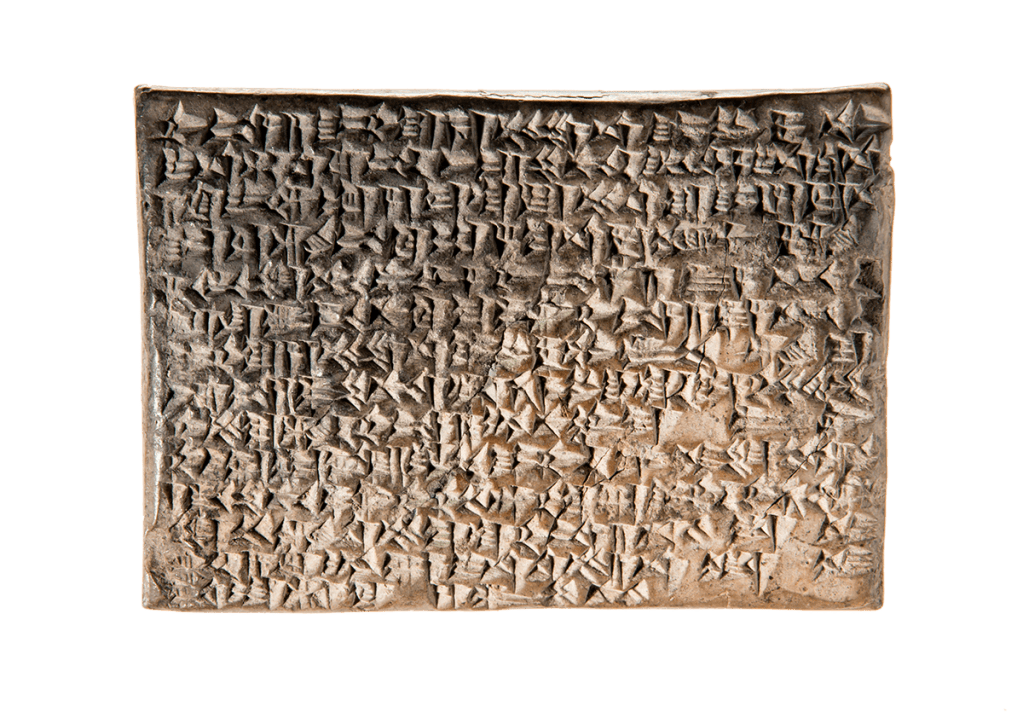
Babylonia was one of the great archival cultures of the ancient world, and under Persian rule its scribal traditions continued with remarkable strength. Thousands of legal, economic, and administrative documents survive from Achaemenid Babylonia: contracts, loans, leases, tax receipts, marriage arrangements, sales, court cases, and letters.10
The Egibi and Murašû archives are especially important. The Egibi family operated in and around Babylon from the late Neo-Babylonian into the early Persian period, dealing in credit, property, business, and contracts. The Murašû Archive, centred at Nippur in the fifth century BC, records land management, tax obligations, leases, animals, silver, and the relationships between Babylonian entrepreneurs, Persian officials, soldiers, and landholders.11 Temple archives mattered too: the Eanna temple at Uruk and the Ebabbar temple at Sippar preserved records of land, labour, offerings, income, and institutional management, showing that temples were economic and documentary institutions as much as religious ones. A Babylonian scribe writing an Akkadian contract under Darius or Artaxerxes was part of the Persian Empire without ceasing to be Babylonian.
Egypt, Ezra-Nehemiah, and Provincial Record-Keeping
Egypt adds another layer to the imperial archive. Demotic documents from Persian-period Egypt preserve legal and economic life — leases, property disputes, temple matters, labour arrangements, and petitions. The “petition of Petesi” and similar documents show how local law and imperial power interacted in practice, and the Egyptian scribal world remained deeply rooted even under Persian rule.12
The Hebrew Bible preserves memories of Persian documentation, especially in Ezra-Nehemiah. In one of the most vivid ancient depictions of an archive in use, the Book of Ezra describes how, when the rebuilding of the Jerusalem temple was challenged, Darius ordered a search of the royal records — and the original decree of Cyrus authorising the work was found, written on a scroll, in the fortress of Ecbatana. Whatever its precise historicity, the story assumes exactly the kind of dispersed, searchable royal archive the Persepolis tablets confirm existed.13
Persian record-keeping was not only transactional; it was also chronicle. The Book of Esther imagines a court where a sleepless king has the “book of records” read aloud and rediscovers a subject’s forgotten service — and Greek writers report the same habit from the other side: Herodotus says the names of the king’s benefactors were entered in official registers, and Ctesias claimed to have drawn his history from the “royal parchments”. The picture is consistent across Egypt, Judah, Babylonia, and Persia: royal power had to be written, sealed, delivered, stored, and remembered, and the empire kept not only its accounts but its memory of who had served it.14
Oral Memory and the Keepers of Tradition
Not all Achaemenid knowledge was written down, and some of the most important was not. Religious and poetic tradition passed largely by memory. The hymns and liturgies later gathered in the Avesta were transmitted orally for centuries and committed to writing only long after the Achaemenid period; the Magi were living archives, preserving sacred knowledge through disciplined recitation rather than storerooms of tablets.15
This oral channel helps explain a striking absence. We have tens of thousands of Persian administrative tablets but almost no Achaemenid literary or religious texts, not because the Persians lacked such traditions but because those traditions were carried in trained memory and in performance rather than in written archives. What survives is skewed toward what institutions wrote down and stored; a whole world of song, genealogy, epic, and ritual that the empire valued highly has left barely a trace precisely because it was never meant for clay or leather.
What Was Preserved, and What Was Lost?
The surviving evidence is rich, but it is misleading if read too simply, because survival was accidental and unequal. Clay endures fire, burial, and collapse; papyrus, parchment, leather, and wood decay. Palace archives survive differently from village records. Business families with large tablet collections become visible while poor households vanish. Official inscriptions endure because kings carved them in stone, while ordinary voices disappear because their documents rotted.
There is a sharp irony in how much of the Persepolis material survived at all. The Fortification and Treasury tablets endured because they were baked hard when Alexander burned Persepolis in 330 BC: the fire that destroyed the palaces preserved the paperwork beneath them. The same conquest almost certainly destroyed the empire’s perishable records — the leather and parchment royal archives that would have held its correspondence and chronicles — leaving us a memory tilted toward clay.16
This creates what might be called archival inequality. The king speaks loudly because he had cliffs, palaces, stonecutters, and scribes. A worker appears only when rations are issued; a woman when an archive records her allocation, estate, marriage, or legal claim; a servant or slave when a household document names him; a rebel when the king defeats him. The Achaemenid archive is not a complete memory but a surviving one, and it must be read critically. It can reveal hidden worlds, but it also hides, classifying people through administrative need — worker, mother, traveller, debtor, witness, slave, official, soldier, taxpayer — while their inner lives rarely appear.
Scholarly Discussion: Was Persia a Literate Empire?
The Achaemenid Empire was not literate in the modern sense. Most people could not read or write, and knowledge still moved through speech, memory, ceremony, oath, song, rumour, and personal witness. Yet the empire depended deeply on writing: its rulers used inscriptions to shape memory, scribes to manage administration, and archives to preserve obligation. Scholars therefore describe Achaemenid literacy as specialised and institutional. Writing belonged to scribes, officials, temples, business houses, and royal administration; it was not universal, but it was powerful, and a single trained scribe could connect a village, palace, temple, or satrapal office to the imperial system.
The right question, then, is not whether Persia had “libraries” in the later classical sense but that it had archives of power. The Persepolis Fortification and Treasury Archives, the Elephantine Papyri, the Aršāma letters, the Egibi and Murašû archives, the Eanna and Ebabbar records, the Behistun Inscription, the Cyrus Cylinder, and the Nabonidus Chronicle all preserve different parts of one world.17 Together they show that Achaemenid knowledge was decentralised, multilingual, and administrative. It lived in palace storerooms, temple offices, business houses, military colonies, satrapal correspondence, and royal monuments. The empire remembered because many institutions remembered for it.
Conclusion: The Memory of Kings and Workers
The Achaemenid Empire was a political structure, but it was also an information system. Roads moved messengers; seals authenticated orders; scribes translated power into text; archives preserved obligations; inscriptions fixed royal memory; contracts protected property; tablets distributed food and silver; papyri carried provincial disputes; leather letters connected satraps to their estates. Beneath the king who stood at the centre lay a whole world of record-keeping — and it was not passive. To record was to control, to seal was to authorise, to store was to remember, and to retrieve was to exercise power. Without archives, tribute could not be assessed, workers could not be supplied, estates could not be managed, letters could not be verified, and royal commands could not travel safely.
Royal inscriptions show how kings wanted to be remembered; administrative archives show how the empire actually functioned; Babylonian business records show private and temple economies; Egyptian papyri show provincial communities; Aramaic letters show communication across distance; seal impressions show authority pressed into clay. The Achaemenids did not create one uniform culture of writing — they governed through many older ones, using Elamite tablets, Babylonian contracts, Egyptian papyri, Aramaic letters, and Old Persian inscriptions without forcing them into a single narrow form. That was not weakness but imperial intelligence.
The empire remembered itself in stone, clay, leather, papyrus, and seal. What survives is fragmentary, but enough remains to show that Achaemenid Persia was not only an empire of kings. It was an empire of scribes.
References
Briant, Pierre. From Cyrus to Alexander: A History of the Persian Empire. Translated by Peter T. Daniels. Eisenbrauns, 2002.
Boyce, Mary. A History of Zoroastrianism. Brill, 1975–1991.
Cameron, George G. Persepolis Treasury Tablets. Oriental Institute Publications 65. University of Chicago Press, 1948.
Ctesias. Persica (fragments). In Jan P. Stronk, Ctesias’ Persian History. Wellem, 2010.
Cyrus Cylinder. Various editions and translations.
Dandamaev, Muhammad A. Studies on Achaemenid Babylonia and slavery.
Darius I. The Behistun Inscription. Various editions and translations.
Driver, G. R. Aramaic Documents of the Fifth Century B.C. Oxford University Press, 1954.
Finkel, Irving. The Cyrus Cylinder: The Great Persian Edict from Babylon. I.B. Tauris, 2013.
Hallock, Richard T. Persepolis Fortification Tablets. Oriental Institute Publications 92. University of Chicago Press, 1969.
Henkelman, Wouter F. M. The Other Gods Who Are: Studies in Elamite-Iranian Acculturation Based on the Persepolis Fortification Texts. Nederlands Instituut voor het Nabije Oosten, 2008.
Herodotus. The Histories. Various translations.
Jursa, Michael. Studies on first-millennium Babylonian economic history.
Kuhrt, Amélie. The Persian Empire: A Corpus of Sources from the Achaemenid Period. Routledge, 2007.
Nabonidus Chronicle. Various editions and translations.
Porten, Bezalel. Archives from Elephantine: The Life of an Ancient Jewish Military Colony. University of California Press, 1968.
Porten, Bezalel, and Ada Yardeni. Textbook of Aramaic Documents from Ancient Egypt. Hebrew University, 1986–1999.
Root, Margaret Cool. The King and Kingship in Achaemenid Art: Essays on the Creation of an Iconography of Empire. Brill, 1979.
Stolper, Matthew W. Entrepreneurs and Empire: The Murašû Archive, the Murašû Firm, and Persian Rule in Babylonia. Nederlands Instituut voor het Nabije Oosten, 1985.
The Hebrew Bible: Ezra, Nehemiah, and Esther. Various translations.
Encyclopaedia Iranica. “Aramaic i. General.”
Encyclopaedia Iranica. “Aršāma.”
Encyclopaedia Iranica. “Babylon under the Achaemenids.”
Encyclopaedia Iranica. “Documents i. In Pre-Islamic Periods.”
Encyclopaedia Iranica. “Documents ii. Babylonian and Egyptian Documents in the Achaemenid Period.”
Encyclopaedia Iranica. “Elephantine.”
Encyclopaedia Iranica. “Epigraphy i. Old Persian and Middle Iranian Epigraphy.”
Encyclopaedia Iranica. “Old Persian.”
Encyclopaedia Iranica. “Persepolis Administrative Archives.”
Encyclopaedia Iranica. “Persepolis Elamite Tablets.”
Institute for the Study of Ancient Cultures, University of Chicago. Persepolis Fortification Archive Project.
Footnotes
- Darius I, Behistun Inscription; Encyclopaedia Iranica, “Epigraphy i. Old Persian and Middle Iranian Epigraphy”; Amélie Kuhrt, The Persian Empire. ↩︎
- Encyclopaedia Iranica, “Documents i. In Pre-Islamic Periods”; Encyclopaedia Iranica, “Aramaic i. General.” ↩︎
- On the invention and restricted use of the Old Persian script, Encyclopaedia Iranica, “Old Persian”; Darius I, Behistun Inscription §70 (the “new form of writing”); Amélie Kuhrt, The Persian Empire. ↩︎
- Darius I, Behistun Inscription, especially §70 (copies sent to the lands); Margaret Cool Root, The King and Kingship in Achaemenid Art; Pierre Briant, From Cyrus to Alexander. ↩︎
- Cyrus Cylinder; Nabonidus Chronicle; Amélie Kuhrt, The Persian Empire; Irving Finkel, The Cyrus Cylinder. ↩︎
- Richard T. Hallock, Persepolis Fortification Tablets; Wouter Henkelman, The Other Gods Who Are; Institute for the Study of Ancient Cultures, Persepolis Fortification Archive Project. ↩︎
- George G. Cameron, Persepolis Treasury Tablets; Encyclopaedia Iranica, “Persepolis Administrative Archives”; Encyclopaedia Iranica, “Persepolis Elamite Tablets.” ↩︎
- Bezalel Porten, Archives from Elephantine; Porten and Yardeni, Textbook of Aramaic Documents from Ancient Egypt; Encyclopaedia Iranica, “Elephantine.” ↩︎
- G. R. Driver, Aramaic Documents of the Fifth Century B.C.; Encyclopaedia Iranica, “Aršāma”; Encyclopaedia Iranica, “Aramaic i. General.” ↩︎
- Encyclopaedia Iranica, “Documents ii. Babylonian and Egyptian Documents in the Achaemenid Period”; Michael Jursa, studies on first-millennium Babylonian economy. ↩︎
- Matthew W. Stolper, Entrepreneurs and Empire; Muhammad A. Dandamaev, studies on Babylonian archives; Encyclopaedia Iranica, “Babylon under the Achaemenids.” ↩︎
- Encyclopaedia Iranica, “Documents ii. Babylonian and Egyptian Documents in the Achaemenid Period” (Demotic legal texts and the petition of Petesi / Papyrus Rylands IX). ↩︎
- Ezra 5:6–6:12 (the search of the royal archives and the decree found at Ecbatana/Achmetha); Amélie Kuhrt, The Persian Empire. ↩︎
- Esther 6:1 (the book of records read to the king); Herodotus, Histories 8.85 and 8.90 (benefactors entered in the royal registers); Ctesias, Persica, on the “royal parchments”; Kuhrt, The Persian Empire. ↩︎
- Mary Boyce, A History of Zoroastrianism (on oral transmission of the Avesta and the role of the Magi); Herodotus, Histories 1.132. ↩︎
- Hallock, Persepolis Fortification Tablets; Henkelman, The Other Gods Who Are; on the destruction of Persepolis in 330 BC, Pierre Briant, From Cyrus to Alexander. ↩︎
- Matthew W. Stolper, “Persepolis Administrative Archives,” Encyclopaedia Iranica; Pierre Briant, From Cyrus to Alexander. ↩︎


Leave a Reply